


Ratio Utility Billing System (RUBS): How to Underwrite the Income
Learn what a ratio utility billing system is and test RUBS income against leases, utility invoices and cash collections before it enters your acquisition model.

Ratio Utility Billing System (RUBS): How to Underwrite the Income
What is a ratio utility billing system?
A ratio utility billing system, or RUBS, allocates shared utility costs to residents using an agreed formula, such as unit area or occupant count. Unlike submetering, the allocation is not an individual reading of each resident’s consumption. For an acquisition, the important question is how much recurring reimbursement income the documents and collections support.
Start with three matched records: the lease authority for the charge, the utility costs being allocated, and the billing and collection ledger for the same period. A seller’s billing total alone is not evidence that all of it becomes cash.
Where RUBS income belongs in the T-12
First identify the presentation. Some supplied operating statements show utility reimbursements as other income; others net recoveries against utility costs. Put both on a consistent basis before comparing properties, and do not count the recovery twice.
| Presentation | Illustrative utility cost | Illustrative recovery | Net contribution |
|---|---|---|---|
| Gross presentation | $120,000 expense | $72,000 other income | -$48,000 |
| Net presentation | $48,000 net expense | Already netted | -$48,000 |
Both rows describe the same fictional cash economics. They produce different revenue and expense totals but the same NOI contribution. Record the source presentation and your reclassification so another analyst can reverse the bridge.
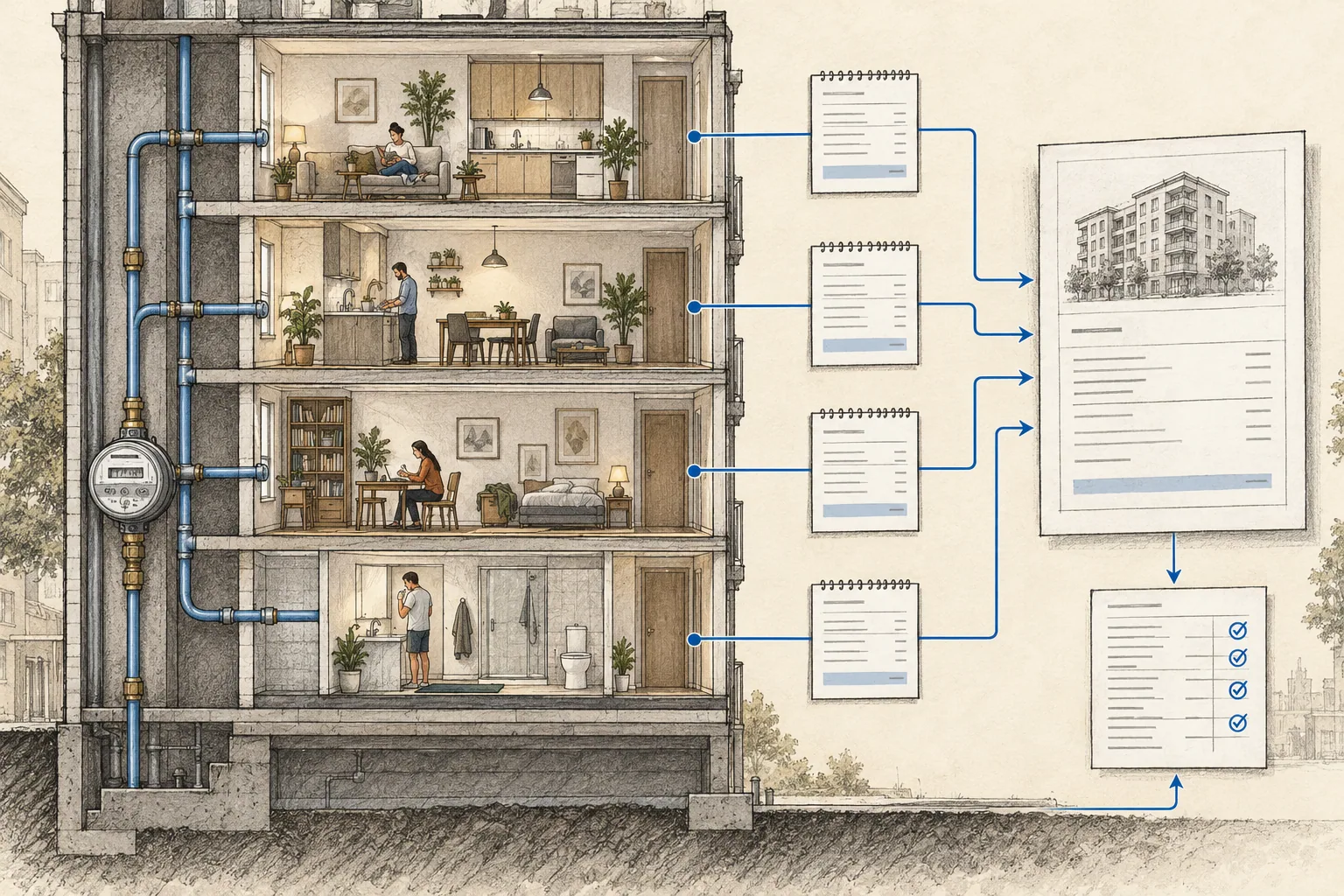
How to underwrite RUBS income: the three-record test
| Evidence | Question to resolve | Carry into the review file |
|---|---|---|
| Executed lease and amendments | Does the supplied lease authorize this charge and allocation? | Clause, effective date, unit and reviewer |
| Utility invoices and allocation report | Which costs and common areas were allocated? | Invoice period, cost pool and allocation basis |
| Billing and collections ledger | How much was billed, waived, refunded or unpaid? | Billed amount, cash received and unmatched balance |
Match units and months before adding totals. Keep missing leases and disputed amounts open. Separate a change in collections from a change in rates or occupancy; annualizing one strong month can hide seasonal costs and temporary catch-up payments. Have the appropriate reviewer confirm the billing arrangement under applicable local rules.
Worked example: a fictional 120-unit property
Assume a full-year eligible cost pool of $120,000, charges of $78,000 and cash receipts of $72,000. The collection rate is $72,000 / $78,000 = 92.3%; the cash recovery ratio is $72,000 / $120,000 = 60.0%. They answer different questions.
| Review row | Billed | Collected | Document support | Model treatment |
|---|---|---|---|---|
| Supported recurring charges | $72,000 | $66,000 | Lease clauses and invoices matched | Candidate recurring recovery |
| Unresolved allocation | $6,000 | $6,000 | Supporting amendment missing | Hold outside accepted case |
| Total | $78,000 | $72,000 | One unresolved item | $66,000 accepted for this teaching case |
The conservative teaching case carries $66,000 of recovery against the full $120,000 utility expense, a net cost of $54,000. The $6,000 difference stays in an exception register until the reviewer resolves it. This is an evidence exercise, not a lender formula or a forecast.
What can change after closing?
Ask whether the current leases survive, whether new leases use a different allocation, whether a billing vendor change interrupts collections, and whether the seller’s expense pool includes nonrecurring items. Document the answer separately from a proposed improvement. A future recovery target belongs in the buyer scenario, not the historical result.
For program-specific requirements, consult the Fannie Mae Multifamily Guide and the lender handling the transaction. Confirm the current rules and underwriting treatment directly; this worksheet does not determine loan eligibility.
Give AI a reconciliation task it can be checked against
Ask: “For each unit and month, show the authorized charge, allocated invoice cost, billed amount and cash received. Cite the source row or page. Flag missing clauses, duplicate charges and unmatched cash. Do not fill gaps with assumed values.” Review a sample against the originals, then recompute the totals independently.
Continue with the T-12 adjustment register, the rent roll normalizer and the multifamily acquisition guide.
Build the review into your underwriting workflow
Our recommended implementation is NextAutomation’s underwriting workflow. It maps supplied deal documents into the workbook your team uses, with source references and an analyst review step. Agree the document types and exception rules during setup, then use the same checks on each acquisition.
See the investment committee memo workflow for how reviewed inputs connect to the decision document.
Frequently asked questions
What is RUBS income?
It is utility reimbursement income charged through an allocation method. Underwriting should distinguish billed amounts from collections and verify the authority and cost basis for those charges.
Is RUBS included in NOI?
Recurring supported recoveries can contribute to the operating case. Use consistent gross or net presentation, retain utility expenses and confirm the lender’s treatment.
How do you calculate a RUBS recovery ratio?
Divide collected reimbursements by the utility cost pool being recovered for the same period. Keep this separate from the collection rate, which divides receipts by billed charges.
Is RUBS the same as submetering?
No. RUBS uses an allocation formula; submetering measures individual consumption. Confirm which arrangement the property actually uses.
Do lenders count RUBS income?
Ask the lender to confirm program-specific treatment and evidence requirements. A billed recovery total alone does not establish accepted income.
Related Articles
Claude for Excel for Real Estate Models: Trace and Check Formulas
Use Claude for Excel to trace a real estate model, test one changed assumption and independently reconcile NOI, debt service and DSCR with a worked cell map.
Hotel Property Improvement Plan (PIP): What It Is and How to Underwrite It
Learn what a hotel property improvement plan requires and model PIP scope, monthly cash needs and rooms out of service with a worked hotel acquisition example.
Land Use Restriction Agreement (LURA): How to Read One
Read a land use restriction agreement before underwriting affordable housing. Build a unit register of rent limits, source references and unresolved amendments.