
Shopping-center lease dependencies

Retail acquisition review: map tenant dependencies

A retail center’s leases can connect tenants to each other through co-tenancy, exclusivity and shared-area obligations. Start with those dependencies before treating the rent roll as a set of independent payments. AI can organize a clause map and exception list so the team can see which operating change may affect another lease or the use of a vacant space.

NextAutomation editorial research method. Public sources establish the framework; the worksheet example is fictional and no property has been verified.

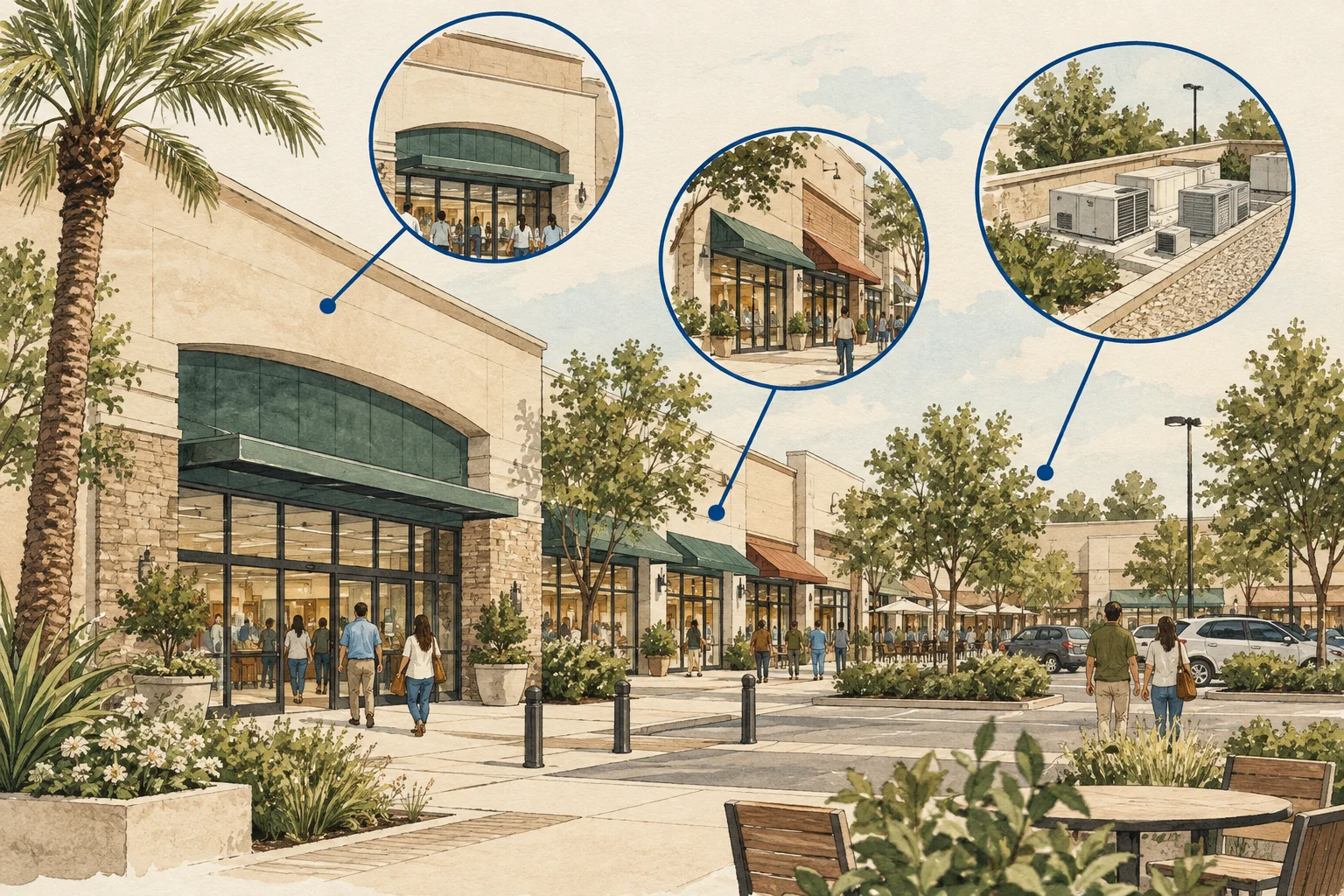
Conceptual illustration of retail tenant relationships, use rights and shared expenses

What changes the decision

Read the operating model before the headline

01

An anchor can matter contractually

The OCC’s CRE handbook discusses co-tenancy provisions and the importance of anchor operations. The practical question is which executed leases contain relevant triggers, definitions and remedies. Do not assume every tenant receives the same right or that an anchor closure automatically activates a remedy. Ask counsel to evaluate the actual clauses and facts.

Source 1
02

Vacant space has use constraints

A proposed replacement tenant may conflict with an exclusive-use right or a recorded restriction even when the physical suite appears suitable. Create a use-rights matrix showing the source, scope and exceptions. Keep a marketing category separate from a legal interpretation, and retain ambiguous language for review instead of simplifying it into an unrestricted yes or no.

03

Shared costs need their own trail

Parking, lighting, landscaping and other common-area costs can be allocated through different lease terms. Preserve the cost pool, excluded items, allocation basis and recovery period. A total CAM receipt does not establish that every expense is recoverable or that the seller’s allocation matches the current lease set. Reconciliation is a document task before it becomes a forecast.

Keep these separate

Three distinctions to preserve in the file

Evidence or situationWhat it tells youWhat to establish next
Occupied anchorProvides an operating observationCheck the lease definitions and evidence relevant to any dependent tenant rights.
Vacant suiteCreates a possible leasing opportunityReview exclusives, use restrictions, systems and required consents before proposing a tenant.
CAM summaryReports common-area charges or receiptsTrace cost pools, allocations and exclusions through actual lease clauses and reconciliations.

A worked review

Retail lease review: from clause to cash flow

ReviewFictional example or required recordDecision boundary
Co-tenancyPlace each in-line lease’s trigger, notice and cure conditions beside the anchor’s documented operating status.An anchor closure alone does not establish a tenant remedy. Counsel reviews the actual clause.Source 1
CAM recoverabilitySeparate the cost pool, exclusions, area denominator, cap wording, billed charges and receipts.A building expense is not automatically recoverable from every tenant.Source 1
Percentage rentFictional lease: 5% of qualifying sales above a stipulated $1,000,000 breakpoint. $1,200,000 qualifying sales produces $10,000 percentage rent.The example assumes the stated sales definition and period; verify exclusions, reporting and payment clauses in the real lease.Source 1
Vacant anchor reuseObtain suite geometry, access/loading, utility evidence, reciprocal agreements and candidate occupier requirements.A reuse idea remains a feasibility request until the building and applicable approvals support it.Source 1
Conceptual illustration of retail tenant relationships, use rights and shared expenses

A practical review sequence

Build a file another reviewer can follow

Use the sequence below to turn the initial description into specific document requests. Preserve contradictory records instead of choosing the more favorable version.

  1. Create the tenant-rights matrix

    Request the executed lease set and amendments for all relevant tenants. Extract use restrictions, exclusives, co-tenancy provisions and notice requirements with page references. Group similar topics but keep the exact contractual definitions separate. Two clauses using the word anchor can refer to different parties or operating conditions.

  2. Investigate the triggering facts

    Ask for dated evidence of the relevant operation, closure, replacement or other event. Keep the observation separate from counsel’s interpretation of the clause. AI can connect documents and dates, but it should not declare a remedy effective because a news item or photograph appears to resemble a contractual trigger.

  3. Reconcile common-area obligations

    Collect CAM budgets, actual expense records, reconciliations and any reciprocal easement or shared-maintenance agreements. Identify costs paid outside the center’s ordinary property accounts. Ask who maintains each shared area and whether another parcel’s owner has consent rights over a change in circulation or parking.

  4. Prepare a replacement-tenant brief

    Describe the proposed use, physical work and affected rights. List open legal, technical and cost questions before comparing prospective rents. Include historical-use concerns where relevant and route environmental questions to a professional. The output should support a focused leasing discussion without claiming that a particular replacement use is approved.

Questions that arise during review

Resolve the ambiguity before the model

Is a co-tenancy clause the same as an anchor lease?

No. A co-tenancy provision may appear in another tenant’s agreement and refer to defined conditions involving an anchor or occupancy. Review the dependent lease and amendments as well as the anchor’s status. A center-level summary can miss that relationship.

Can AI recommend a new tenant category?

It can organize criteria and identify documented restrictions. A recommendation still requires local demand work, physical compatibility and legal review. This kit does not claim that a vacancy is unrestricted or that a suggested tenant would achieve a particular rent.

Should an old dry-cleaner use be ignored after vacancy?

No. Preserve the historical-use information for the environmental professional. Vacancy or a change in business does not establish the current condition. The worksheet records the question and needed evidence rather than making an environmental finding.

How do you calculate percentage rent?

Apply the lease’s defined rate to qualifying sales above its applicable breakpoint for the specified period. In the fictional example, ($1,200,000 minus $1,000,000) x 5% = $10,000. Actual exclusions and alternative formulas come from the lease.

Source 1
What should a retail CAM reconciliation show?

Show the recoverable cost pool, tenant-specific exclusions and caps, allocation basis, amount billed and amount collected. Keep a disputed or unsupported charge visible rather than treating the total expense as tenant income.

Source 1

From the page to your next task

Start with the useful output.

Tenant dependency and recovery register

Build an editable tenant dependency and recovery register, retain document references and open decisions, then export your team's working file.

Scope: retail tenant relationships, use rights and shared expenses

Bring
An optional file nickname Status, observations and document references for the four evidence items; unknown is acceptable
Leave with
Tenant dependency and recovery register with editable, expandable records and document locators Two fictional worked rows showing mismatches and decisions to review CSV and readable text exports with row provenance, method sources and edition A separate document-request companion with suggested reviewers

Edition 2026-09-30.1

Put the reviewed inputs to work

Continue with a relevant template.

The Complete Claude Playbook: Commercial Underwriting

Use the commercial lease workflow to retain source references while reviewing retail tenant obligations and exceptions. Reconcile the center’s clause dependencies separately; the playbook does not establish enforceability or predict tenant performance.

Explore the existing resource ↗

Evidence and scope

Follow each claim to its source.

Commercial Real Estate Lending, Comptroller’s Handbook, version 2.0

Office of the Comptroller of the Currency · Checked 2026-09-30

March 2022 supervisory handbook; lease review, property income, re-leasing costs and property-type distinctions.

  • Bank supervisory guidance, not a property appraisal, current market survey or universal financing standard. No handbook percentage is adopted as a deal assumption.
Open original source ↗
Brownfields All Appropriate Inquiries

U.S. Environmental Protection Agency · Checked 2026-09-30

Environmental inquiry process, historical uses, records, inspections and significant data gaps.

  • A portal search or this editorial worksheet is not an environmental professional’s assessment or a liability determination.
Open original source ↗