

Method / Comparable definitions

Physical vs economic occupancy: define the units and period

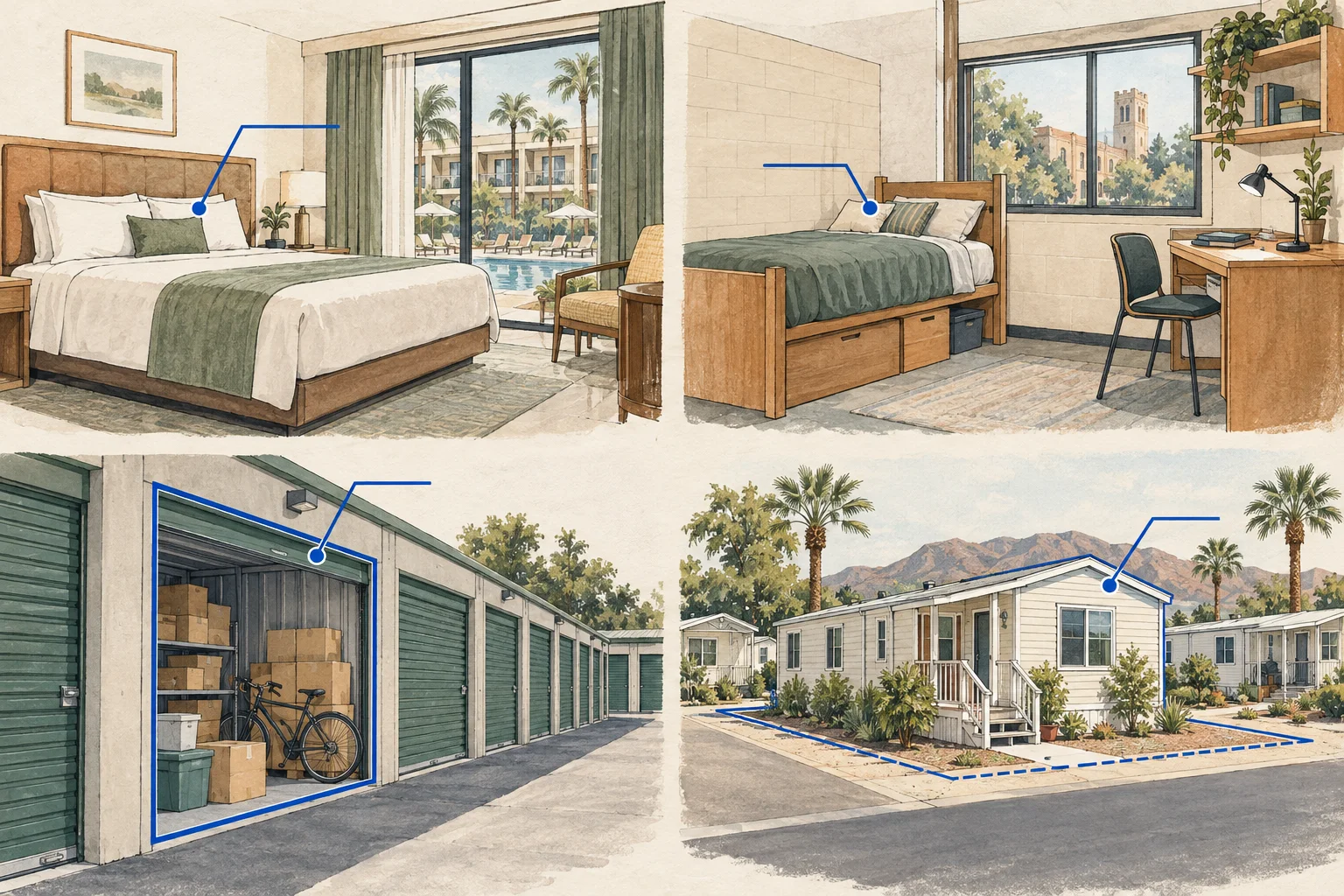
Start a comparison by defining what is counted and over which period. Hotel rooms, student beds, storage units and park sites represent different operating inventories. The useful question is which inventory was available, occupied and earning the reported revenue in the same period. Keep these definitions in the file before carrying a ratio across assets or into an acquisition model.

Use the fictional worked example and editable worksheet to apply this method to your own documents.

Conceptual editorial illustration of name the revenue unit before comparing the number.

The useful distinctions

Make the review specific.

01

Separate physical and operating inventory

EIA publishes building counts and floorspace as different measures. Apply that same discipline to the revenue unit in a deal file: a physical space, a licensed or permitted inventory and an available operating unit can differ. The definition must travel with the count.

Source 1
02

Keep the period attached

A one-day occupied count cannot be directly compared with a period-based room-night measure. In your worksheet, state whether the denominator is a point-in-time inventory, average inventory or capacity multiplied by days. Reconcile closures and unavailable units explicitly.

03

Preserve the land-versus-home distinction

Manufactured-housing community analysis should keep sites and home interests distinct. Fannie Mae’s community term sheet is financing context for that asset; it is not a substitute for the property’s own roster, agreements or eligibility review.

Source 1

Observation to next action

What the evidence supports, and what to ask next.

Evidence in the fileWhat it describesNext review
Hotel roomsAvailable room-nights during the stated periodIdentify out-of-service rooms and the revenue definition.
Student bedsContracted or occupied beds under a defined lease periodDo not replace bed inventory with apartment count.
Storage and park inventoryExplicit rentable units or sites, with size and availabilityKeep occupied inventory separate from revenue collection and ownership interests.
Conceptual editorial illustration of name the revenue unit before comparing the number.

Work through the file

Revenue-unit comparison worksheet

Use this sequence with the documents available for your file. Keep a reference with each observation and turn unresolved items into explicit requests.

  1. Define both sides

    Write the numerator, denominator and period in words before using a ratio. Retain the operator’s original labels so another analyst can compare definitions. In the fictional portfolio, one file reports hotel room nights and another reports student apartments, while the student lease schedule counts beds. Keep these as separate measures; renaming both as units does not make the underlying inventories comparable.

  2. Reconcile the inventory

    Ask for a dated roster and its unavailable, combined, subdivided or temporarily closed spaces. Keep counts at the appropriate room, bed, unit or site level. For the fictional hotel, request the daily closure history instead of assuming every physical room was available throughout the period. For storage, request unit sizes before treating a count-based occupancy figure as an area-based measure.

  3. Tie the revenue period

    Match the ledger period to the inventory period. Separate scheduled charges, recognized revenue and collections; explain any annualization or other transformation. The fictional park roster combines occupied sites with park-owned homes, so ask which agreement and charge belongs to each interest. A home and its occupied site should not become two equivalent land sites merely because both appear as revenue lines.

  4. Review comparability

    Group only records with compatible definitions, or preserve the difference visibly. Give the operator the inventory exceptions and the accountant the revenue-period questions, then record their accepted definitions together. Keep a comparison on hold when the denominator remains unresolved. The kit creates a review sheet, not an automatic cross-asset return ranking, and supplies no market benchmark for judging the fictional portfolio.

Before using the output

Questions about this method.

Can two equal occupancy percentages mean different things?

Yes. The numerator, denominator, period and treatment of unavailable inventory may differ. Compare those definitions before comparing the percentages.

How can AI check the denominator across files?

Ask AI to compare roster IDs, closure dates and ledger labels, flagging apartment-versus-bed counts, missing unit sizes and duplicate site/home interests. Require a reference for each flagged mismatch. The operator should confirm available inventory and the accountant should confirm revenue definitions. These fictional observations teach the method; they are not a benchmark or measured operator results.

What does the occupancy calculation do, and does the CSV recalculate?

The browser calculates the entered numerator divided by the denominator as a percentage for each row. Text and CSV exports capture the displayed results as static values: they contain no spreadsheet formulas and do not recalculate if you edit the exported inputs. The calculation does not verify the population, source records or accounting basis, forecast revenue, or combine different units and periods. Keep the definitions and supporting documents with the result for review.

From the page to your next task

Start with the useful output.

Revenue-unit and period comparison register

Build an editable revenue-unit and period comparison register, retain document references and open decisions, then export your team's working file.

Scope: One review file using the method in the accompanying guide. The example is fictional.

Bring
A name for the review file. Evidence status, observations and document references where available.
Leave with
Revenue-unit and period comparison register with editable, expandable records and document locators Two fictional worked rows showing mismatches and decisions to review CSV and readable text exports with row provenance, method sources and edition A separate document-request companion with suggested reviewers

Edition 2026-09-30.1

Evidence and scope

Follow each claim to its source.

Manufactured Housing Communities Term Sheet

Fannie Mae · Checked 2026-09-29

Program description distinguishes community sites, shared infrastructure and park-owned homes. Used only for that operating-unit distinction.

  • Program-specific financing guidance, not a universal acquisition rule or a determination of eligibility.
  • No property documents, current rents, licensed capacity or ownership interests were verified.
Open original source ↗
2018 CBECS building-characteristics tables

US Energy Information Administration · Checked 2026-09-30

Publishes building counts and floorspace separately for a disclosed survey vintage. It is context for explicit units, not current property income or a local market dataset.

  • Method or documentation reference; no property-level extraction or market study was performed for this guide.
Open original source ↗