

Laboratory systems and activity

Laboratory property review: start with the intended process

Life-sciences research should begin with the actual laboratory work, materials and equipment. A lab-ready label cannot establish suitability for a different protocol. Use AI to organize supplied requirements and building records into a process-to-system review, then ask qualified biosafety, engineering and regulatory reviewers to evaluate the gaps before treating an available suite as an operating laboratory.

NextAutomation editorial research method. Public sources establish the framework; the worksheet example is fictional and no property has been verified.

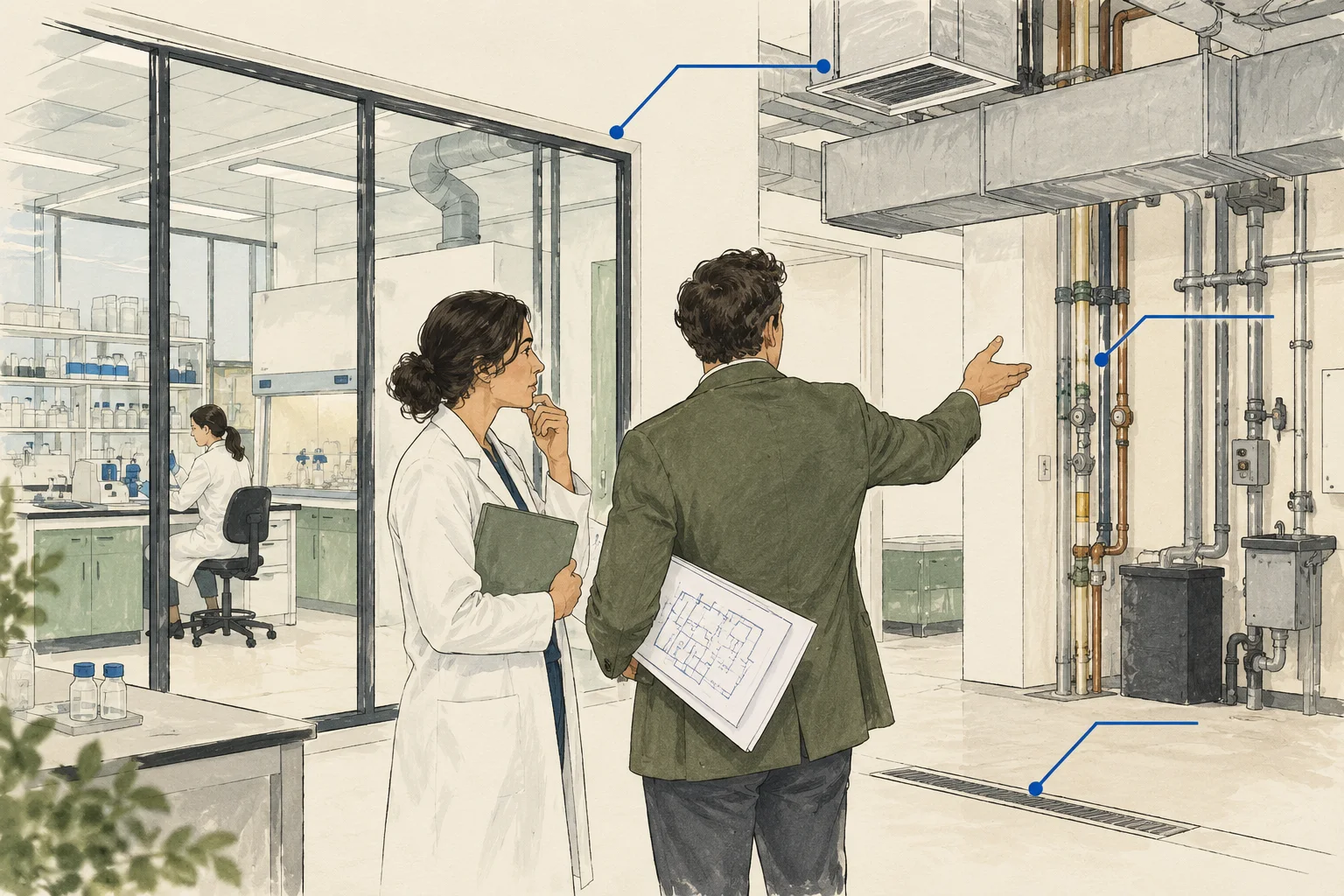
Conceptual illustration of laboratory protocols, building systems and responsibility boundaries

What changes the decision

Read the operating model before the headline

01

Risk assessment follows the work

CDC’s BMBL guidance emphasizes protocol-driven risk assessment and describes itself as advisory. For property research, that means the intended work must be defined before the building is evaluated. Do not assign a biosafety level from a listing or imply that the guidance alone approves an operation. Record who owns the assessment and which activities it actually covers.

Source 1
02

Systems are connected to the protocol

Ventilation, exhaust, utilities, backup arrangements and waste handling should be reviewed against stated requirements. A former laboratory may have been designed for a different set of activities. Keep installed systems, design intent and tested performance distinct. AI can organize specifications but should not infer operating compatibility from a equipment list or a prior tenant’s name.

03

Research and clinical testing differ

Identify whether the proposed work is research, production or testing connected to human health decisions. That distinction can change the relevant permission and certification questions. Preserve the operating entity and activity scope in the file. Neither the broad life-sciences category nor an adjacent medical tenant establishes the approvals applicable to the proposed laboratory.

Keep these separate

Three distinctions to preserve in the file

Evidence or situationWhat it tells youWhat to establish next
Lab-ready marketingSignals a possible research leadRequest the specific former use, system scope and evidence supporting readiness.
Installed laboratory systemsDescribes physical infrastructureCompare design and performance records with the proposed protocols and materials.
Operator risk assessmentAddresses a defined set of activitiesConfirm scope, responsible reviewers and whether the proposed work is included.
Conceptual illustration of laboratory protocols, building systems and responsibility boundaries

A practical review sequence

Build a file another reviewer can follow

Use the sequence below to turn the initial description into specific document requests. Preserve contradictory records instead of choosing the more favorable version.

  1. Prepare a controlled activity brief

    Ask the operator for the process and equipment requirements necessary for property review, excluding sensitive research details that are not needed. Identify materials, utilities, operating hours and waste interfaces at an appropriate level. Do not let a generic laboratory label substitute for the information reviewers need.

  2. Map systems to requirements

    Collect as-built drawings, commissioning records, maintenance history and available system specifications. Connect each requirement to a documented system or a missing-evidence item. Keep landlord and tenant systems distinct. A qualified engineer should determine whether the records are sufficient or new testing and modifications are required.

  3. Identify the review and permission owners

    Request the operator’s relevant risk-assessment process and applicable certification or permission records. Record responsible entities and scope without claiming blanket compliance. AI can index those references; it should not determine biosafety classification, process safety or clinical testing eligibility from a document title.

  4. Build the transition task list

    Review alteration rights, restoration, decommissioning and any residual obligations associated with the former use. Ask who funds testing or modifications and who must accept the space. Export a focused handoff for counsel, engineers and the operator rather than a readiness score that hides unresolved technical dependencies.

Questions that arise during review

Resolve the ambiguity before the model

Does a former lab automatically suit another tenant?

No. The proposed protocols, materials and equipment may differ. Request the former system and use records, then compare them with the new operator’s requirements through qualified review. Reuse should be demonstrated for the specific activity rather than inferred from a prior label.

Can AI assign a biosafety level?

This kit does not do that. It organizes the evidence and identifies the responsible reviewer. Risk assessment depends on the actual work and appropriate expertise; a property description or room layout cannot substitute for that process.

What can AI join in a laboratory file?

Ask it to connect the approved requirement brief to drawing references, commissioning records and lease responsibilities, flagging systems with no supporting record. A laboratory engineer should assess compatibility and the operator’s biosafety reviewer should assess activity scope. Exclude unnecessary confidential protocols and personal information from this organizational task.

From the page to your next task

Start with the useful output.

Protocol-to-building requirement register

Build an editable protocol-to-building requirement register, retain document references and open decisions, then export your team's working file.

Scope: laboratory protocols, building systems and responsibility boundaries

Bring
An optional file nickname Status, observations and document references for the four evidence items; unknown is acceptable
Leave with
Protocol-to-building requirement register with editable, expandable records and document locators Two fictional worked rows showing mismatches and decisions to review CSV and readable text exports with row provenance, method sources and edition A separate document-request companion with suggested reviewers

Edition 2026-09-30.1

Evidence and scope

Follow each claim to its source.

Property Types in Portfolio Manager

ENERGY STAR · Checked 2026-09-30

Building-use categories for energy benchmarking, including mixed use, medical office and laboratories.

  • Benchmarking categories are not zoning classifications, licenses or certifications that a proposed use fits a building.
Open original source ↗
Clinical Laboratory Improvement Amendments

Centers for Medicare & Medicaid Services · Checked 2026-09-30

Program context for laboratory testing on humans for health assessment, diagnosis, prevention or treatment.

  • Not every medical office or research laboratory performs CLIA-covered testing; no facility certification was checked.
Open original source ↗
Biosafety in Microbiological and Biomedical Laboratories

Centers for Disease Control and Prevention · Checked 2026-09-30

Advisory biosafety guidance emphasizes protocol-driven risk assessment.

  • Advisory guidance is not itself regulation or evidence that a building is approved for a particular laboratory process.
Open original source ↗