

Refrigeration and responsibility

Cold-storage warehouse requirements: a buyer's review

Cold-storage research should connect the required temperature regime to the building, refrigeration equipment and party responsible for operating it. A refrigerated warehouse label cannot establish that connection. Use AI to organize system records, leases and service history, then ask qualified reviewers to resolve gaps before treating a cold room as ready for the next product or tenant.

NextAutomation editorial research method. Public sources establish the framework; the worksheet example is fictional and no property has been verified.

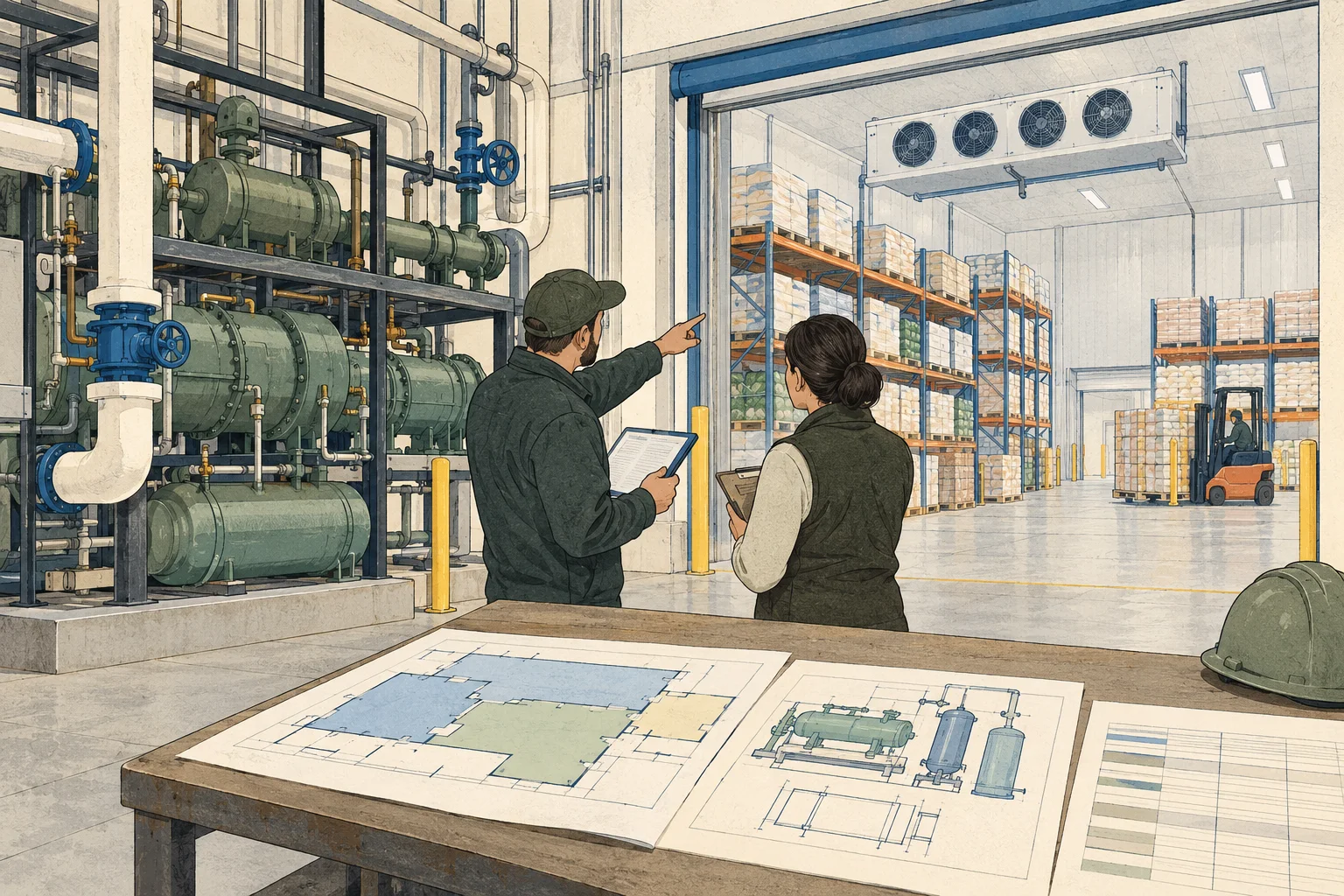
Conceptual illustration of cold-storage temperature zones, refrigeration systems and responsibility

What changes the decision

Read the operating model before the headline

01

The refrigerant changes the questions

EPA’s RMP guidance includes an ammonia-refrigeration chapter. Its relevance depends on the actual system and applicable conditions, not the asset name alone. Ask which refrigerant and quantities are documented, who operates the equipment and which specialist has reviewed the obligations. Do not assume every cold-storage building is covered by the same program.

Source 1
02

Room temperature is not performance evidence

Separate a design setpoint, a current reading and a history of maintained conditions. A room can meet a temperature briefly without demonstrating performance under the intended loading or door-opening pattern. Keep temperature zones, product requirements and operating assumptions distinct. The property file should identify what has actually been tested and what remains a proposed use.

03

Equipment and real estate can have different owners

Compressors, evaporators, controls and backup systems may be owned, leased or maintained by different parties. Build a responsibility schedule that links the equipment register to lease and service documents. The next occupier’s ability to use a system should not be inferred from its physical presence or the seller’s description of a turnkey facility.

Keep these separate

Three distinctions to preserve in the file

Evidence or situationWhat it tells youWhat to establish next
Insulated enclosureProvides part of the physical temperature boundaryReview envelope condition and the system required for the intended operating regime.
Installed refrigerationIdentifies equipment presently on siteEstablish ownership, capacity evidence, condition and service responsibilities.
Operating temperature recordShows observations for a stated periodCompare conditions and loads with the proposed use without treating one reading as sustained capability.
Conceptual illustration of cold-storage temperature zones, refrigeration systems and responsibility

A practical review sequence

Build a file another reviewer can follow

Use the sequence below to turn the initial description into specific document requests. Preserve contradictory records instead of choosing the more favorable version.

  1. Describe the product and temperature need

    Ask the operator to define temperature zones, handling pattern, loading peaks and required continuity. Keep these as requirements, not existing property attributes. A refrigerated distribution use and a freezing process can require different evidence even if both are marketed under the cold-storage category.

  2. Create the equipment ownership register

    Request equipment schedules, serial or asset identifiers, leases and maintenance agreements. Connect each major component to the party responsible for repair, replacement and operation. Flag equipment omitted from the sale or subject to another contract. AI can align names but should not resolve inconsistent ownership documents by guesswork.

  3. Review evidence of operation

    Collect available commissioning records, service history, temperature logs and energy information with dates and conditions. Ask a refrigeration specialist to identify what those records demonstrate and what testing is missing. Preserve failure and repair events instead of summarizing them away in a single statement that the system is functional.

  4. Prepare a transition plan

    List consents, technical review, maintenance transfer and any additional evidence needed for the next operator. Route refrigerant or process questions to the appropriate specialist. The worksheet gives the team a documented handoff; it does not certify food safety, system capacity, legal compliance or the capital cost of changing the temperature regime.

Questions that arise during review

Resolve the ambiguity before the model

Does refrigerated mean frozen storage?

No. State the required zones and operating temperatures explicitly. Do not translate a marketing description into a specification. The system reviewer needs the proposed product, handling and loading conditions before evaluating whether supplied records support the intended operation.

Can energy bills prove refrigeration capacity?

They provide operating context, not a capacity test. Bills can reflect changing loads, tariffs and other equipment. Connect them to the period and operation, then ask a specialist what additional system or commissioning evidence is required.

What can AI check in a cold-storage file?

Ask it to match equipment IDs across the lease, service log and asset register, then flag missing ownership records or temperature logs from a different zone. Have counsel settle ownership and a refrigeration engineer assess system evidence. Neither join establishes performance by itself.

From the page to your next task

Start with the useful output.

Temperature-zone and equipment responsibility register

Build an editable temperature-zone and equipment responsibility register, retain document references and open decisions, then export your team's working file.

Scope: cold-storage temperature zones, refrigeration systems and responsibility

Bring
An optional file nickname Status, observations and document references for the four evidence items; unknown is acceptable
Leave with
Temperature-zone and equipment responsibility register with editable, expandable records and document locators Two fictional worked rows showing mismatches and decisions to review CSV and readable text exports with row provenance, method sources and edition A separate document-request companion with suggested reviewers

Edition 2026-09-30.1

Evidence and scope

Follow each claim to its source.

Commercial Real Estate Lending, Comptroller’s Handbook, version 2.0

Office of the Comptroller of the Currency · Checked 2026-09-30

March 2022 supervisory handbook; lease review, property income, re-leasing costs and property-type distinctions.

  • Bank supervisory guidance, not a property appraisal, current market survey or universal financing standard. No handbook percentage is adopted as a deal assumption.
Open original source ↗
Guidance for Facilities on Risk Management Programs

U.S. Environmental Protection Agency · Checked 2026-09-30

Process-specific guidance including ammonia refrigeration facilities.

  • Applicability depends on substances, quantities and operations; not every refrigerated building is an RMP-covered facility.
Open original source ↗