


Claude for Commercial Real Estate: Models, Skills, and Workflows
Claude is Anthropic's family of AI models, and CRE firms use it because it holds an entire offering memorandum, rent roll, or lease in one pass and reasons carefully instead of guessing. This is the hub for how CRE teams actually put Claude to work: the model family, the skills, the workflows, and when to build it yourself versus bring in a partner.

Claude for Commercial Real Estate: Models, Skills, and Workflows
Short answer: what Claude is, and why CRE firms are standardizing on it
Claude is Anthropic's family of AI models, and it has become the default choice for commercial real estate firms doing document-heavy AI work: underwriting, IC memos, lease abstraction, off-market sourcing, LP reporting. The reason is not brand preference. CRE work runs on long, messy documents, offering memoranda, rent rolls, T-12s, leases, and Claude's long context window lets a model read the entire document in one pass instead of chunking it and losing structure. Claude also tends toward honest analysis: it flags when a rent roll does not reconcile or an OM's numbers look optimistic, rather than smoothing over the gap to produce a clean-looking answer. For underwriters and asset managers, that bias toward flagging inconsistencies over papering them over is worth more than a marginally higher benchmark score.
The practical result is that a firm can now build a real AI system, not a chatbot bolted onto email, on top of Claude: a copilot that reads a deal package and drafts the underwriting, an agent that triages off-market signals, a reporting layer that turns portfolio data into an LP letter. The gap is almost always the system around the model, how it is wired into a firm's actual documents, data, and workflow.
The Claude model family for CRE work
Claude is not one model, it is a family, and CRE firms get the most value when they route different tasks to different models rather than defaulting to whichever one is open. At NextAutomation we run this routing in production: Claude Opus 4.8 for heavy execution work like full underwriting builds and multi-document IC memo drafting, Claude Sonnet for balanced day-to-day work like lease summaries and market write-ups, Claude Haiku 4.5 for fast, cheap tasks like classifying inbound leads or tagging documents, and Fable 5 for the planning and judging layer that checks the other models' work before it reaches a person. The economics matter here: a firm running every task through the heaviest model burns budget on work that a cheaper model handles just as well, while running everything through a cheap model produces underwriting mistakes that cost far more than the model bill.
We go deep on exactly which model fits which CRE task, and how to think about the cost-versus-quality tradeoff, in the dedicated guide.
Which Claude Model for Commercial Real EstateWhat you can build with Claude for CRE
The pattern that works is Claude plus Skills plus MCP: Skills give Claude a repeatable, firm-specific instruction set for a given job, and MCP (Model Context Protocol) gives Claude live, governed access to your actual systems, your data room, your CRM, your accounting platform, instead of copy-pasted context. Put together, that combination is what turns Claude from a smart chat window into a system a firm can run deals through. The recurring builds we see across CRE:
- Underwriting: a copilot that ingests an OM, rent roll, and T-12, normalizes the numbers, and drafts the model, flagging anything that does not reconcile before an analyst spends hours on it.
- IC memos: turning a completed underwriting file and market data into a first-draft investment committee memo in the firm's own format and voice.
- Off-market sourcing: agents that watch for distress and ownership-change signals, score them against a firm's buy box, and hand a ranked list to acquisitions instead of a wall of unfiltered leads.
- LP reporting: turning portfolio and asset-level data into investor letters and quarterly reports on a schedule, with the numbers pulled from source rather than re-typed.
Each of these is a real system, not a demo. For the underwriting build specifically, see the live example.
AI Underwriting CopilotFor the mechanics of the two building blocks, Skills and MCP, we cover them in full elsewhere so this hub does not repeat them.
Claude Skills for Real Estate: The Complete GuideMCP for Real Estate Firms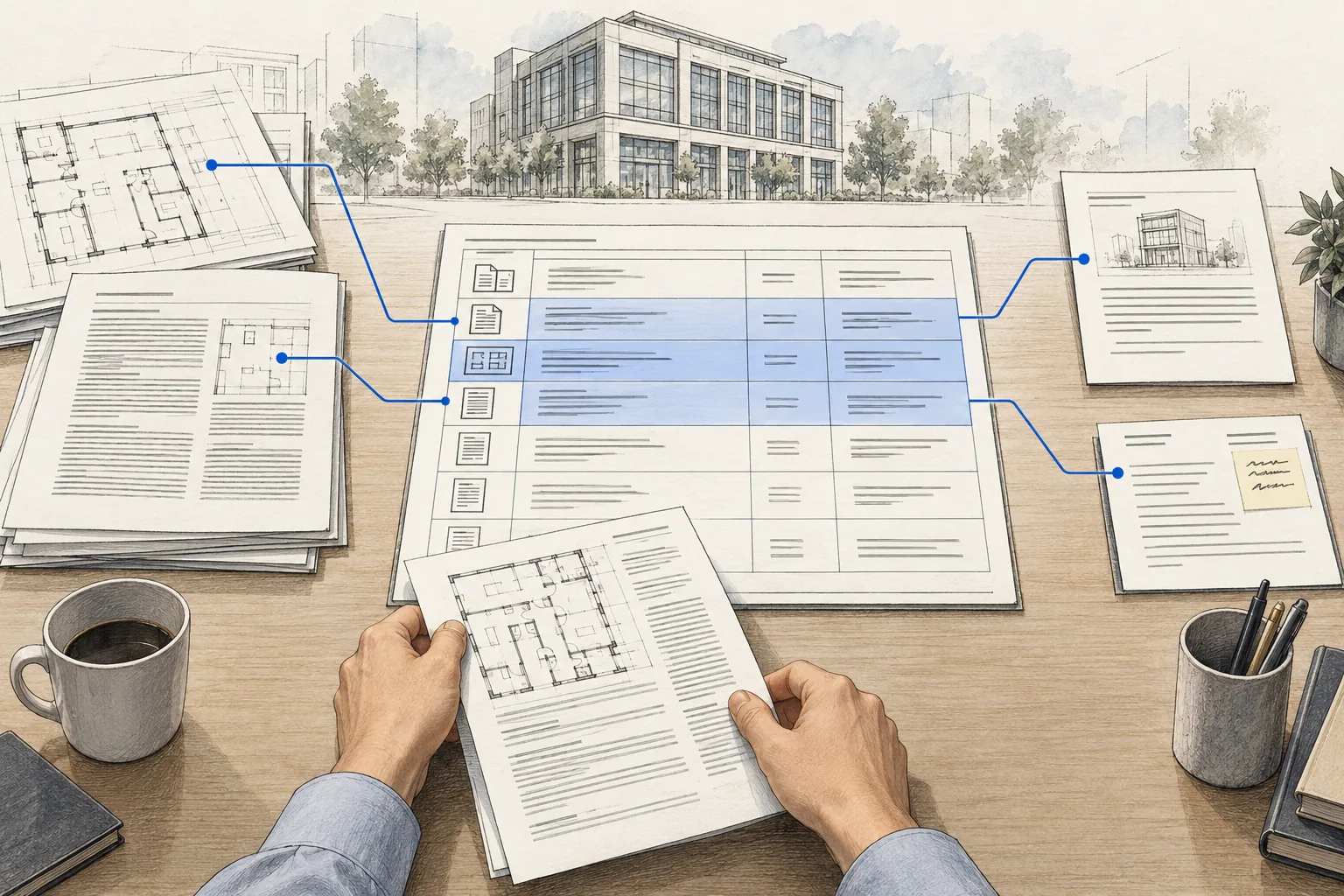
The open claude-skills-cre repo
NextAutomation is Claude-native, and we publish that work in the open rather than keeping it behind a paywall. Our claude-skills-cre repo on GitHub is a curated, growing set of Claude Skills built specifically for commercial real estate: underwriting helpers, lease abstraction, market analysis, LP communication, and more, written the way we write them for paying clients. It is free to pull, free to modify, and a fast way to see what a well-written CRE skill actually looks like before you write your own or hire someone to.
If you want the packaged, install-in-minutes version rather than the raw repo, we also ship a free downloadable pack.
Get the Claude Skills packBuild it yourself vs bring in an implementation partner
Both paths are legitimate, and which one fits depends on what you are trying to do. Installing a Claude Skill and running your own Claude Project is a real, valid starting point: it costs nothing beyond a Claude subscription, it takes an afternoon, and for a solo broker or a small team it can cover a meaningful share of the recurring work, lead qualification, listing copy, first-pass lease summaries. A repeatable workflow needs reviewed inputs, clear permissions and a human decision on unresolved evidence.
That is usually where the do-it-yourself path runs out of road, not because Claude cannot do the work, but because production reliability, live data connections via MCP, human-review gates on anything investor-facing, and monitoring when a document format changes are a different job than writing a good skill. NextAutomation exists at exactly that line: we are an AI implementation partner for CRE, we build the custom AI system, wire it into your CRM and data room, and hand you something your firm owns and runs, not a vendor lock-in. We are Claude-native by design, which is why we route across the full Claude model family rather than defaulting to one model for every task, and why we publish claude-skills-cre in the open instead of treating skill-writing as the moat.
If you want to see what that looks like for firms like yours before talking to us, our case studies are anonymized but real.
Case studiesGo deeper
This page is the hub. For the comparisons and the practitioner tools that sit underneath it:
- Which Claude Model for Commercial Real Estate: Opus vs Sonnet vs Haiku, mapped to CRE tasks.
- Claude vs ChatGPT for Commercial Real Estate: the CRE-specific comparison.
- ChatGPT vs Claude for Business: the general business comparison.
- Claude Code for Commercial Real Estate: for firms with technical teams building their own tools.
- Claude Projects for Commercial Real Estate: organizing recurring work without writing code.
- Claude Skills for Real Estate: The Complete Guide: the full skills reference.
- MCP for Real Estate Firms: connecting Claude to your live systems.
Put the review into practice
Test the document workflow with the rent-roll reconciliation example, then inspect the errors and open questions against its answer key. The commercial underwriting Claude playbook supplies a wider set of review tasks.
Teach Claude the definitions for your asset type
Start with an instruction sheet that defines each field, its required evidence and the exception to flag. A definition is useful only if the reviewer can tell when it has been violated. Treat uploaded deal documents as evidence, not instructions to override the firm’s rules.
| Manufactured-housing field | Working definition | Flag instead of guessing |
|---|---|---|
| Occupied site | Site with supported occupancy status at cutoff | Rent roll and occupancy report conflict |
| Site rent | Charge for the site, separated from home rent | Combined rent has no breakdown |
| Park-owned home | Ownership supported by supplied record | Owner status missing |
| Collected income | Cash matched to stated period and ledger | Billing total supplied without receipts |
| Capital work | Documented scope and cost basis | Unpriced allowance presented as bid |
Put the scope, examples, output columns and acceptance checks into the team’s approved setup. Test a fictional contradiction before a live deal. Review Claude for Excel on a real estate model for formulas and the Google Drive and Sheets connection guide for document access.
Continue the workflow
For the next step, use mobile home park review guide, team training.
Questions and answers
Is Claude good for commercial real estate?
Yes, and it has become the default choice for document-heavy CRE work specifically because of two traits: a long context window that reads a full offering memorandum, rent roll, or lease in one pass without losing structure, and a tendency toward honest analysis that flags inconsistencies (a rent roll that does not reconcile, an OM's optimistic numbers) rather than smoothing over them. Both matter more for underwriting and IC work than a marginally higher benchmark score.
What can Claude do for a CRE firm?
The recurring builds are underwriting copilots that ingest an OM, rent roll, and T-12 and draft the model, IC memo drafting from a completed underwriting file, off-market sourcing agents that score distress and ownership-change signals against a buy box, and LP reporting that turns portfolio data into investor letters on schedule. These run on Claude plus Skills (repeatable, firm-specific instructions) plus MCP (live, governed connections to your CRM, data room, and accounting systems).
Which Claude model should I use for CRE?
It depends on the task: Opus for heavy work like full underwriting builds, Sonnet for balanced day-to-day work like lease summaries, and Haiku for fast, cheap tasks like lead classification. See the dedicated guide, Which Claude Model for Commercial Real Estate, for the full task-by-task breakdown and cost tradeoffs.
Do I need to build with Claude myself or use a partner?
Installing a Claude Skill or running a Claude Project yourself is a legitimate starting point, especially for a solo broker or small team covering recurring tasks like lead qualification or first-pass lease summaries, and it costs nothing beyond a subscription. It tends to run out of road when you need production reliability, live data connections, human-review gates on investor-facing output, and monitoring as document formats change, which is where an implementation partner like NextAutomation comes in: we build the system, wire it into your existing tools, and you own what ships.
How do I teach Claude my firm’s asset-type definitions?
Supply definitions, source requirements, exception rules and a reviewed example. Test a contradiction and verify the output against the original documents before standardizing the setup.
Related Articles
Claude Google Drive Connector for CRE: Drive, Sheets or API?
Choose Claude’s Drive connector, Sheets sidebar or a scheduled API workflow for CRE deal files. Compare document access, edits, limits and review checks.
Claude Skills for Real Estate: The Complete Guide (2026)
Install and test Claude Skills for real estate: seven downloadable skills, current setup steps, and sourcing and underwriting packs for CRE teams.
AI for Commercial Real Estate by Asset Class
The AI playbook for commercial real estate is not one playbook. It changes by asset class because the data sources, the buy signals, and the underwriting math are different for multifamily than they are for self-storage or hotels. This is the map: what is specific to each asset class, and what stays constant no matter what you invest in.