

Illinois / Cook County record example

Cook County industrial records: separate parcels and tenant space

An Illinois industrial deal can be described as one property while its records refer to several tax parcels, buildings and leased spaces. Use a parcel-to-premises cross-reference before analyzing tenancy. Cook County’s property-tax portal provides one local starting path, but the rent roll and measured plans must explain how the offered real estate becomes usable tenant space.

Cook County property-tax portal checked September 30, 2026 as a bounded Illinois example. No statewide parcel schema or tenant inventory is claimed.

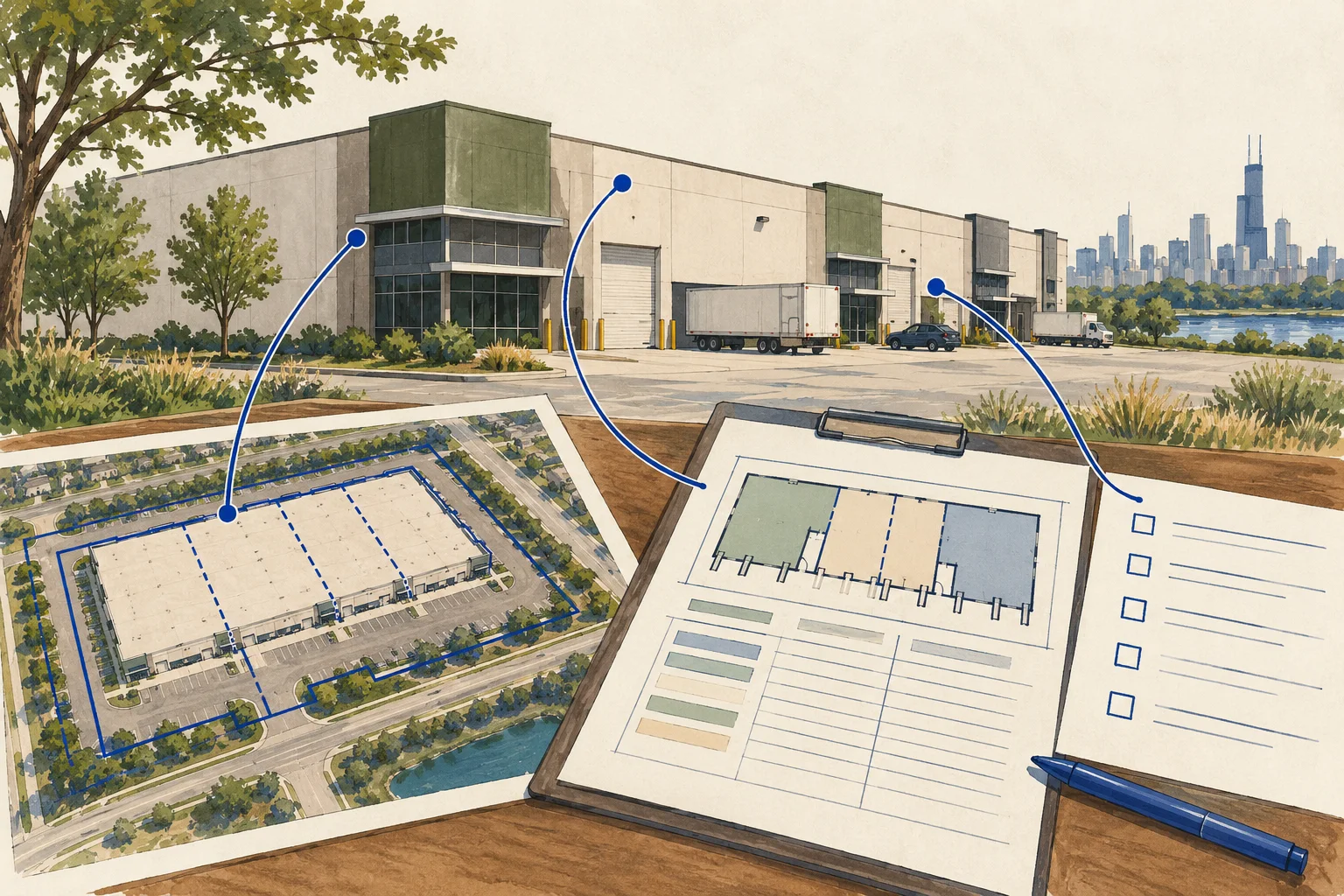
Conceptual evidence illustration for Illinois: parcel building and suite identity. No surveyed geography or real property depicted.

Start with the right evidence

What changes the decision

01

Choose the local record path

Cook County describes its portal as a consolidated entry point across officials involved in the property-tax system. It is useful for routing a property-record question, not for defining the industrial tenancy. Elsewhere in Illinois, identify the relevant local offices rather than assuming Cook County’s process applies statewide.

Source 1
02

One tax record is not one tenant

Ask for a schedule that joins each tax parcel to its buildings and each building to its suites. Preserve many-to-one and one-to-many relationships. A single rent-roll row may describe several spaces, while a large building may contain multiple leases; neither pattern can be established from the parcel count alone.

03

Separate area definitions before computing metrics

Request the basis for assessed, gross, rentable and leased area wherever those numbers appear. Keep the source and date with each. If a shared loading area or common corridor is counted differently across documents, ask the property manager and measurer to resolve it before presenting an occupancy percentage.

Different records, different questions

Keep these decisions separate

EvidenceUseful questionNext document
Local tax recordWhich parcel or assessment unit is represented?Underlying local record and seller’s included-parcel schedule.Source 1
Building planHow are structures, access and shared areas arranged?Measured plans with building and suite identifiers.
Lease scheduleWhich premises and rights are occupied by each tenant?Executed premises exhibits and a reconciled rent roll.
Conceptual Illinois research sequence, not a factual map or property inspection.

An acquisition desk workflow

Build a reviewable file

Use these steps as an editorial research method. The worksheet records what your documents support and assigns a next action to what remains unresolved.

  1. Define the real estate package

    List the parcels and buildings the seller says are included, preserving their original identifiers. Separate adjacent land or shared facilities that are merely mentioned in the brochure. This creates a stable purchase boundary before the analyst begins aggregating areas or treating a campus name as one legal property.

  2. Use the local tax route for the tax question

    For a Cook County asset, use the county portal to locate the relevant property-tax information and responsible office. Save the referenced record and its period. Ask for clarification of mismatches, but do not make the assessment description responsible for verifying tenant demising walls or the current lease configuration.

    Source 1
  3. Reconcile suites against the documents

    Ask the manager to map the rent roll onto the measured building plan using suite identifiers. Record where one lease spans several suites or where a shared area has no clear allocation. Keep document conflicts visible for the manager or counsel rather than resolving them by a convenient address match.

  4. Build a reviewable occupancy basis

    Choose the area or unit denominator only after the offered premises and lease scope are reconciled. The worksheet records parcel scope, building configuration, premises and shared rights. Export unresolved items for the acquisition team so lease review, physical measurement and title questions remain assigned to the appropriate specialists.

Before the next request

Questions worth resolving

Can I count Illinois industrial tenants from parcel records?

No. The tax-record unit does not establish the number of leases or usable suites. Request the current rent roll and premises exhibits, then reconcile them with the building plan. This guide supplies a method for that join, not a tenant census or an inferred statewide industrial inventory.

Does the Cook County portal cover every Illinois county?

No. It is the local example used here because the county provides a consolidated tax-information entry point. For a property elsewhere, identify the actual local record custodian and preserve its definitions. The underlying parcel, building and lease distinctions still belong in the acquisition file.

Source 1
How can AI help reconcile Illinois industrial premises?

Use AI to cross-reference the seller’s parcel schedule and local tax references with building IDs, suite labels and lease exhibits. Preserve one-to-many relationships and flag a rent-roll row that lacks a premises match. In the Cook County example, the property researcher resolves tax records, while the manager, measurer and counsel resolve occupancy, area and rights.

Source 1

From the page to your next task

Start with the useful output.

Parcel-building-suite bridge

Build an editable parcel-building-suite bridge, retain document references and open decisions, then export your team's working file.

Scope: Cook County property-tax portal checked September 30, 2026 as a bounded Illinois example. No statewide parcel schema or tenant inventory is claimed.

Bring
Your case name Document status, observations and references for each evidence row
Leave with
Parcel-building-suite bridge with editable, expandable records and document locators Two fictional worked rows showing mismatches and decisions to review CSV and readable text exports with row provenance, method sources and edition A separate document-request companion with suggested reviewers

Edition 2026-09-30.1

Evidence and scope

Follow each claim to its source.

Property Tax Portal

Cook County Government · Checked 2026-09-30

County entry point consolidating property-tax information across responsible offices.

  • Cook County is a worked local path, not a statewide Illinois tenant, building or ownership dataset.
Open original source ↗