

Property and provider identities

Healthcare property review: identify owner, operator and licensee

Healthcare-facility research should identify the real-estate owner, operating entity and license or certification holder before interpreting revenue or capacity. Those roles may belong to different organizations. AI can organize the entity and document chain, but an address match does not prove common ownership, transferable operating authority or that a property lease receives all of the facility’s operating income.

NextAutomation editorial research method. Public sources establish the framework; the worksheet example is fictional and no property has been verified.

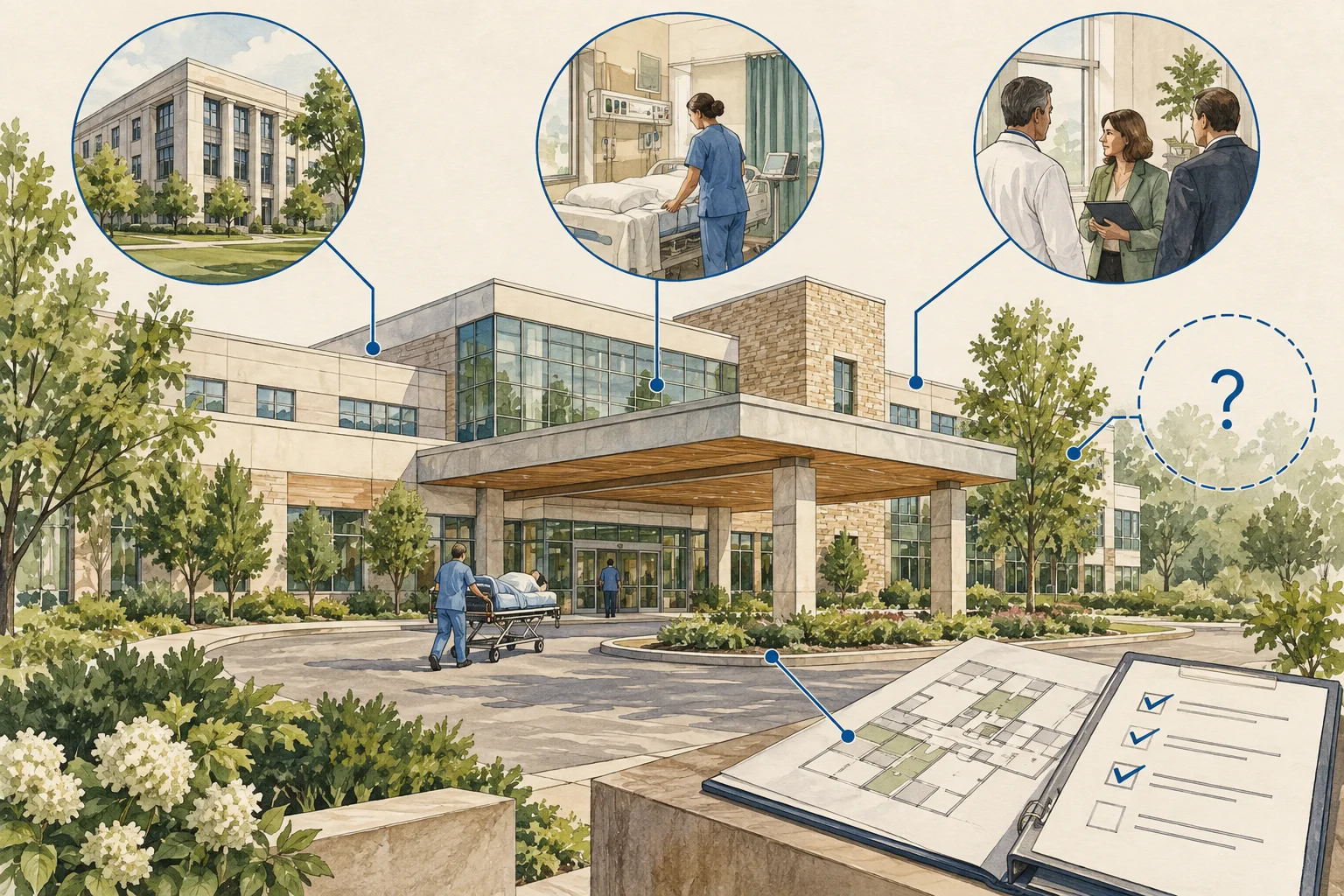
Conceptual illustration of healthcare property ownership, operator identity and licensed capacity

What changes the decision

Read the operating model before the headline

01

Enrollment ownership is not land title

CMS publishes reported ownership information for enrolled skilled nursing facilities. That is useful for understanding a covered operator’s relationships, but it is not a deed record and does not cover every healthcare model. Keep enrollment identities separate from parcel ownership and match them through actual documents. Similar names or addresses should remain unconfirmed links until supported.

Source 1
02

Capacity has several meanings

Authorized beds, staffed beds, available beds and occupied beds can differ. Record the exact denominator and reporting date, and ask why any capacity is unavailable. A licensed maximum does not establish present operating capacity or utilization. The property review should preserve these differences without collecting unnecessary patient-level information or making judgments about clinical quality.

03

A master lease does not erase site differences

A portfolio-level agreement may cover several facilities with different permissions, capital needs and operating histories. Build a facility-by-facility schedule linked to the controlling agreement. Keep allocated rent, actual receipts and operator revenue distinct. Where the supplied contract does not allocate an obligation by site, flag the question rather than inventing a split.

Keep these separate

Three distinctions to preserve in the file

Evidence or situationWhat it tells youWhat to establish next
Real-estate ownershipIdentifies an interest in the premisesVerify title and lease parties separately from provider enrollment records.
Operating license or certificationRelates to an entity, activity and facility scopeReview current status and change conditions with the relevant specialist.
Facility operating receiptsReflects a healthcare business and accounting basisDistinguish them from property rent and reconcile obligations under the actual lease.
Conceptual illustration of healthcare property ownership, operator identity and licensed capacity

A practical review sequence

Build a file another reviewer can follow

Use the sequence below to turn the initial description into specific document requests. Preserve contradictory records instead of choosing the more favorable version.

  1. Construct the entity-role table

    List property owner, lessor, tenant, operator, manager and licensee for each facility. Attach the document supporting each role and retain unresolved similarities as questions. AI can suggest possible matches, but a common address or parent brand should not create a confirmed legal relationship by itself.

  2. Reconcile the facility scope

    Request the site schedule, relevant licenses or certifications and an anonymized capacity summary. Align facility names and identifiers across documents. Preserve closed wings, unavailable beds and changes in operation. Ask the specialist to explain scope differences instead of treating the largest reported capacity as the current operating inventory.

  3. Trace property obligations

    Review the lease or master lease, amendments, guarantees and capital responsibilities. Identify whether rent or obligations are allocated by site and how the contract handles changes. Keep operator financial statements separate from the property-level payment record. A profitable operating business and an enforceable property obligation are related but different questions.

  4. Prepare the continuity review

    List the consents, technical work and evidence required for the contemplated owner or operator change. Send licensing questions to the appropriate specialist and property questions to counsel and engineers. The worksheet provides a handoff; it does not determine licensure, clinical quality, reimbursement eligibility or investment suitability.

Questions that arise during review

Resolve the ambiguity before the model

Can CMS ownership data resolve every facility owner?

No. Coverage and definitions depend on the dataset. The cited source addresses reported ownership for enrolled skilled nursing facilities. Use it as a scoped research input and verify real-estate interests through the appropriate property and transaction records.

Does a license transfer with the building?

Do not assume that it does. Record the relevant entity, facility and activity, then ask the licensing reviewer to identify the conditions for the proposed change. The worksheet should show the request and unresolved status until supported.

What can AI check across a healthcare portfolio?

Ask it to align facility IDs and entity roles across title records, lease schedules and scoped provider records, flagging unmatched sites and different capacity definitions. Have property counsel and the operating specialist confirm those links. Use aggregated records; patient data is unnecessary for this initial document reconciliation.

From the page to your next task

Start with the useful output.

Owner-operator-licensee responsibility map

Build an editable owner-operator-licensee responsibility map, retain document references and open decisions, then export your team's working file.

Scope: healthcare property ownership, operator identity and licensed capacity

Bring
An optional file nickname Status, observations and document references for the four evidence items; unknown is acceptable
Leave with
Owner-operator-licensee responsibility map with editable, expandable records and document locators Two fictional worked rows showing mismatches and decisions to review CSV and readable text exports with row provenance, method sources and edition A separate document-request companion with suggested reviewers

Edition 2026-09-30.1

Evidence and scope

Follow each claim to its source.

Commercial Real Estate Lending, Comptroller’s Handbook, version 2.0

Office of the Comptroller of the Currency · Checked 2026-09-30

March 2022 supervisory handbook; lease review, property income, re-leasing costs and property-type distinctions.

  • Bank supervisory guidance, not a property appraisal, current market survey or universal financing standard. No handbook percentage is adopted as a deal assumption.
Open original source ↗
Skilled Nursing Facility All Owners

Centers for Medicare & Medicaid Services · Checked 2026-09-30

PECOS-reported ownership information for enrolled skilled nursing facilities.

  • Official indexed description checked; application shell is script dependent. Enrollment ownership is not a real-estate deed and coverage is not all healthcare facilities.
Open original source ↗