

Delivery and lease-up

Build-to-rent review: separate delivery from stabilization

A build-to-rent community needs a home-level delivery and leasing record, not just a completed-unit headline. Establish which homes are legally available to occupy, which are physically finished, which are leased and which have begun producing receipts. AI can align these dates and expose missing handoffs while the team keeps construction assumptions separate from operating evidence.

NextAutomation editorial research method. Public sources establish the framework; the worksheet example is fictional and no property has been verified.

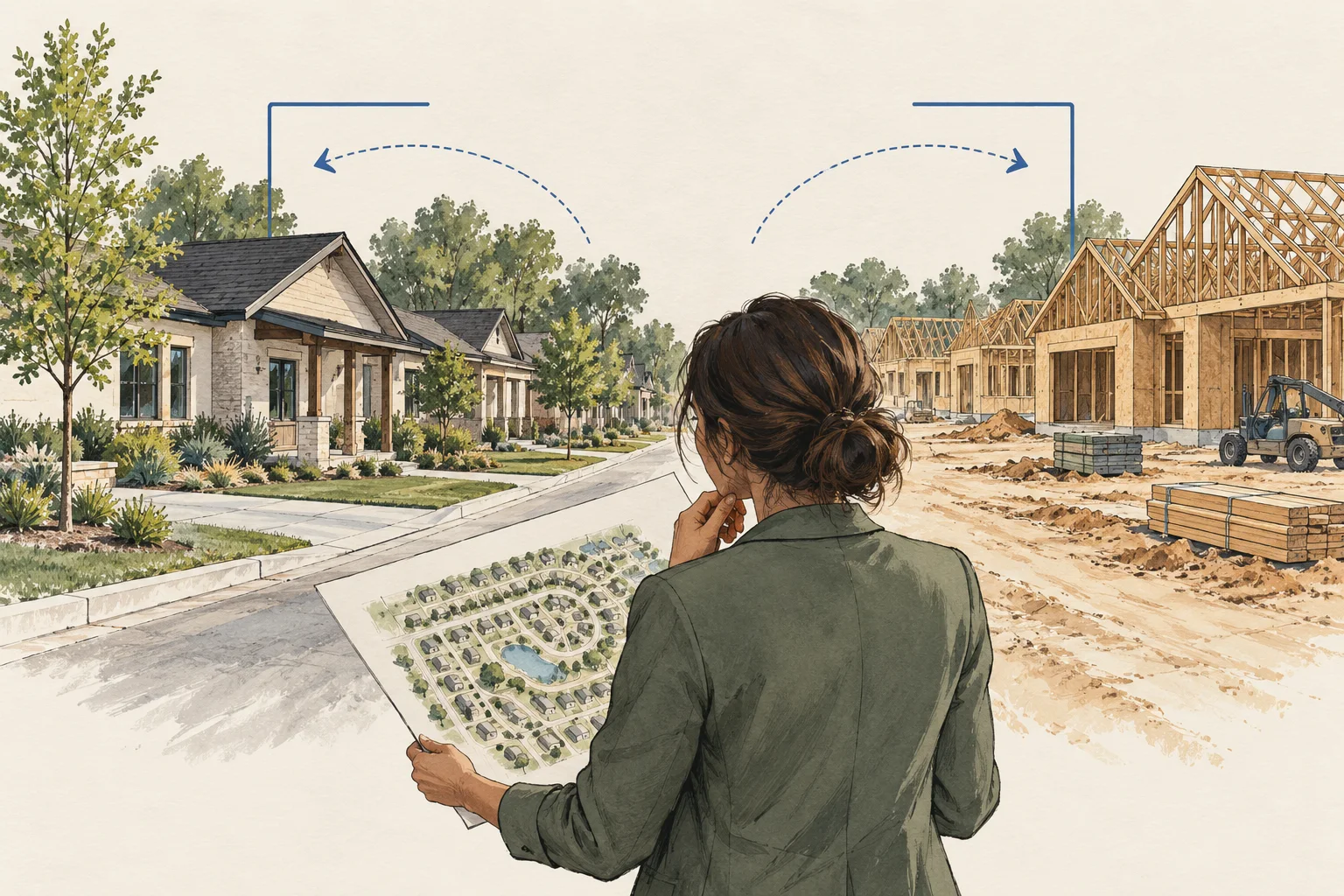
Conceptual illustration of rental-home delivery, common infrastructure and lease commencement

What changes the decision

Read the operating model before the headline

01

Community and scattered portfolio differ

Fannie Mae’s BTR overview describes contiguous, centrally managed rental-home developments as distinct from dispersed single-family rentals. That distinction suggests a useful first question: what infrastructure and operations are shared? A collection of addresses does not establish one community, one maintenance budget or one closing boundary. Confirm the actual ownership and management structure.

Source 1
02

Completion has several dates

A home can be substantially complete while approvals, utility activation or a resident move-in remain outstanding. Preserve construction completion, occupancy authorization, lease execution and rent commencement as separate events. Mixing these dates makes a development pipeline appear stabilized and conceals the tasks standing between a finished building and an income-producing home.

03

Common assets need an owner

Roads, stormwater facilities, landscape areas and amenities may sit outside individual home parcels. Build an obligation map showing who owns, maintains and funds each shared asset. The important question is not whether a brochure calls the community low maintenance, but whether the documents allocate recurring service and replacement costs to the party in the model.

Keep these separate

Three distinctions to preserve in the file

Evidence or situationWhat it tells youWhat to establish next
Delivered homeConstruction team reports physical progressVerify applicable occupancy authorization, utility readiness and unresolved punch-list work.
Executed leaseA household has signed an agreementConfirm commencement, move-in, concessions and receipts rather than treating signature as collected rent.
Shared amenityResidents may use a common facilityIdentify ownership, maintenance agreement and opening conditions before allocating its cost.
Conceptual illustration of rental-home delivery, common infrastructure and lease commencement

A practical review sequence

Build a file another reviewer can follow

Use the sequence below to turn the initial description into specific document requests. Preserve contradictory records instead of choosing the more favorable version.

  1. Create a home-level register

    Use one stable identifier for each home and connect it to the parcel, address, plan type and construction phase. Preserve homes planned but not delivered in a separate status. This register should explain which homes appear in both the construction schedule and the operating rent roll.

  2. Reconcile delivery milestones

    Request dated completion records, occupancy documentation, utility activation evidence and lease commencement schedules. Compare milestones by home rather than taking the latest site-wide update as proof for every building. Ask who signs off unresolved work and whether a resident can occupy while that work remains open.

  3. Map shared responsibilities

    Collect association documents, maintenance agreements and infrastructure acceptance records. Identify items the developer expects another party to assume and whether that transfer has happened. Keep a proposed future handover separate from the responsibility in force today, including any security or reserve associated with incomplete infrastructure.

  4. Prepare the transition questions

    Give the development and property-management teams a common exception list: homes missing a milestone, unsigned service agreements and costs not assigned to an operating budget. Ask AI to draft that list from supplied records, then review every exception before using it to describe stabilization or forecast lease-up.

Questions that arise during review

Resolve the ambiguity before the model

Is every rental-house portfolio BTR?

Terminology varies. For this workflow, identify whether the homes form a purpose-built, centrally managed community and document the actual structure. A scattered portfolio needs address-level logistics and maintenance analysis that a single-site community model may conceal.

Can finished homes count as occupied?

No. Physical completion, authorization to occupy, possession and rent receipts are different evidence. Keep each status visible and avoid moving an entire phase to occupied because a contractor reports substantial completion.

Where does AI help most?

It can compare home IDs across construction, approval and leasing schedules and prepare missing-document requests. It should not infer an occupancy approval, utility acceptance or resident move-in from a photograph. Those events need their own dated evidence.

From the page to your next task

Start with the useful output.

Home delivery and lease-start schedule

Build an editable home delivery and lease-start schedule, retain document references and open decisions, then export your team's working file.

Scope: rental-home delivery, common infrastructure and lease commencement

Bring
An optional file nickname Status, observations and document references for the four evidence items; unknown is acceptable
Leave with
Home delivery and lease-start schedule with editable, expandable records and document locators Two fictional worked rows showing mismatches and decisions to review CSV and readable text exports with row provenance, method sources and edition A separate document-request companion with suggested reviewers

Edition 2026-09-30.1

Evidence and scope

Follow each claim to its source.

Commercial Real Estate Lending, Comptroller’s Handbook, version 2.0

Office of the Comptroller of the Currency · Checked 2026-09-30

March 2022 supervisory handbook; lease review, property income, re-leasing costs and property-type distinctions.

  • Bank supervisory guidance, not a property appraisal, current market survey or universal financing standard. No handbook percentage is adopted as a deal assumption.
Open original source ↗
Build-to-Rent Overview

Fannie Mae · Checked 2026-09-30

October 2024 overview distinguishing contiguous, centrally managed rental-home communities from dispersed single-family rentals.

  • Publisher definition and historical context; no national threshold or market statistic is imported into this guide.
Open original source ↗