

Vermont / Permit-history research

Vermont property reuse: trace the Act 250 permit history

For a Vermont commercial reuse project, an old approval should begin a chronology, not end the review. Match the current property and proposal to the project record, identify later amendments or related decisions, and ask the responsible reviewer which documents matter now. Keep the prior permitted scope distinct from the buyer’s intended changes so a familiar use description does not substitute for a current project review.

The official Act 250 database search interface supplies the research mechanics. This guide does not determine jurisdiction, current legal applicability or the status of a particular project.

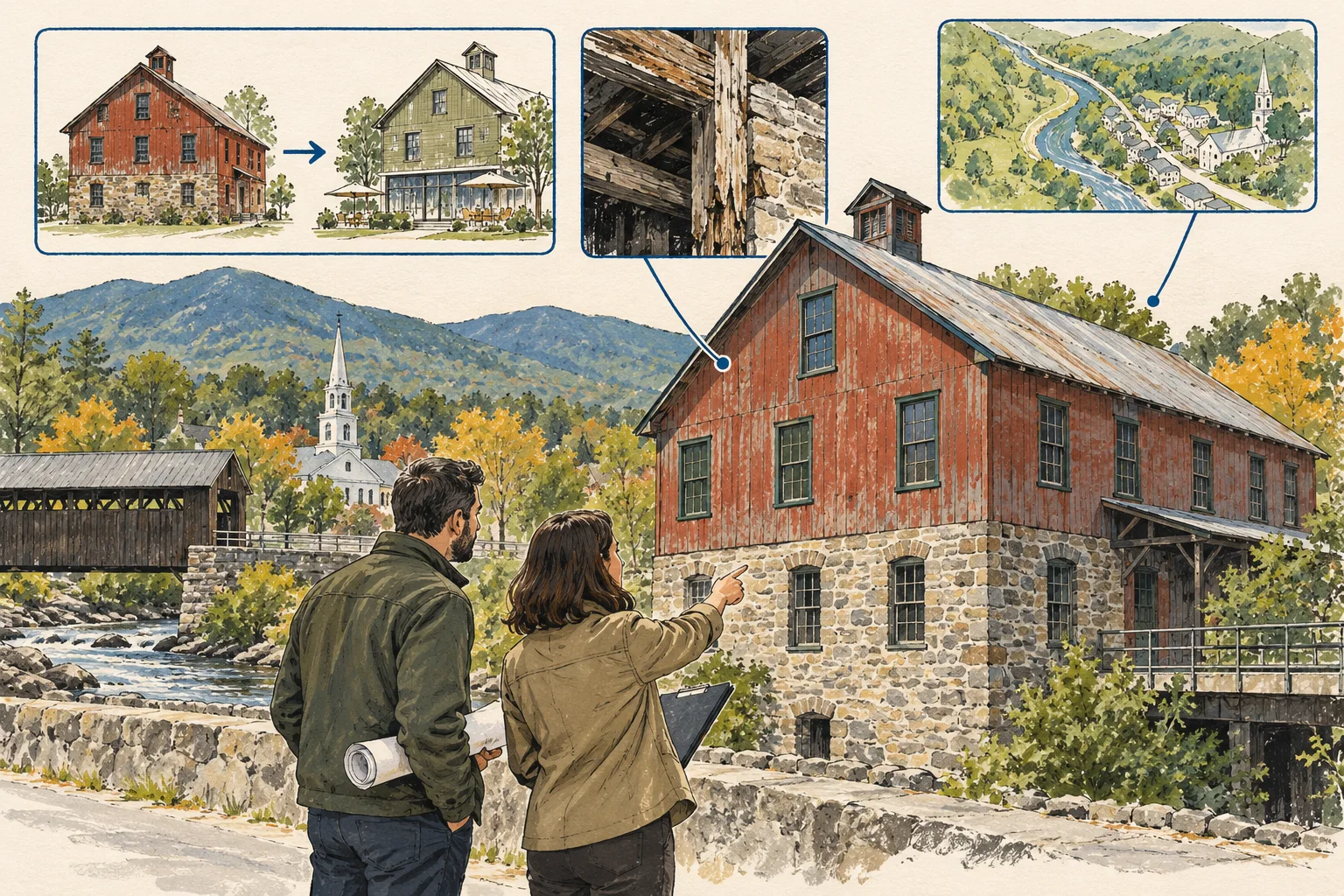
Conceptual illustration of documents and decisions for Vermont commercial property research

What changes the decision

Vermont property reuse: follow the permit history before relying on an old approval

01

Search for the project, not just its current marketing name

The official Act 250 database allows project-number, name, address, town and participant searches. It also separates statuses and application types, including amendments and jurisdictional opinions. Use these fields to build a project identity trail, especially when a property has changed names or the proposed acquisition covers only part of an older project.

Source 1
02

An application status is not a substitute for the decision

Keep the retrieved record, the actual decision document and its referenced plans distinct. Record whether the source describes a submission, pending matter, permit or other outcome. Ask the reviewer to identify the controlling scope and any later changes rather than treating the most convenient search result as the full approval history.

03

The proposed reuse needs a precise description

Document changes in activity, layout, access, operating pattern and site work. Supply the same description to the relevant state and local reviewers. The purpose is to identify the actual review path for the proposal, not to infer jurisdiction or exemption from a broad property label or an old tenant’s operation.

Read the records together

Evidence and its investment use

EvidenceWhat it establishesNext decision
Project identity and search recordThe record located through specified search fields.Check aliases, related project numbers and the property match.
Decision and amendment chronologyThe supplied decisions and their referenced scopes.Ask which documents govern the proposed change.
Current reuse proposalThe activity and work the buyer intends.Obtain the appropriate state and local review for that proposal.
Conceptual illustration of the Vermont research workflow

Put it to work

Permit-history and reuse worksheet

The kit creates a permit-history brief that preserves document scope and unresolved interpretation. It is useful when a seller’s packet contains one older approval but the property has changed over time.

  1. Build the project identity trail

    Start with the project number if supplied and cross-check the name, town and address. Record alternative names from the documents rather than guessing aliases. The database warns that broad searches are limited, so keep the search sufficiently specific and retain the criteria used to locate the relevant record.

    Source 1
  2. Collect the decisions behind the index

    Request the decision documents, referenced plans and later amendments identified by the project history. Make a dated index with the scope of each item. Mark missing or unresolved links explicitly, and ask the qualified reviewer to identify any additional related file needed for a complete interpretation.

  3. Describe the buyer’s change clearly

    Prepare a concise comparison of the existing represented operation and proposed reuse. Include physical work and operational changes rather than just a new tenant name. Give that comparison to the relevant reviewers and retain their questions and responses with the exact plan version they considered.

  4. Translate the review into acquisition tasks

    Separate document collection, legal interpretation and design work. Record which conclusions are supported and which remain unresolved. Export the kit for the transaction team so an older approval is described accurately and any assumption about the proposed reuse remains conditional until reviewed.

Before the next conversation

Questions this review should answer

Does an old permit establish that my new use is allowed?

Its actual scope and subsequent history need review alongside the new proposal. Ask the responsible professional or authority to explain the relationship. Do not infer an answer from a project name, a broad commercial category or the fact that a similar activity once operated on the property.

How should pending records appear in the acquisition memo?

Preserve their status and date and keep requested outcomes separate from issued decisions. State which part of the buyer’s plan depends on the pending matter. A later update should change the relevant assumption only after the new document is reviewed and its scope is understood.

What can AI do with an Act 250 chronology?

AI can cross-reference project numbers, identify later amendment references and compare descriptions across dated documents. It should flag missing plans and uncertain property matches. The reviewer decides current applicability and the significance of the changes; the search index alone cannot settle those questions.

From the page to your next task

Start with the useful output.

Project-name and permit-amendment chronology

Build an editable project-name and permit-amendment chronology, retain document references and open decisions, then export your team's working file.

Scope: Reuse permit history

Bring
A working file name; use a non-sensitive label for your project. Your document references and observations, or leave missing evidence marked unknown.
Leave with
Project-name and permit-amendment chronology with editable, expandable records and document locators Two fictional worked rows showing mismatches and decisions to review CSV and readable text exports with row provenance, method sources and edition A separate document-request companion with suggested reviewers

Edition 2026-09-30.1

Evidence and scope

Follow each claim to its source.

Act 250 Database Search

State of Vermont · Checked 2026-09-30

Official project-search fields, status categories and application-type filters.

  • Search interface reviewed only; no project query or determination of current Act 250 jurisdiction or legal applicability was performed.
Open original source ↗