

North Dakota / Lodging demand evidence

North Dakota lodging: test the room-night assumptions

A regional demand story becomes an acquisition case only when it connects to the property’s own room nights. For North Dakota lodging, distinguish leisure demand, contracted crews and other customer groups before relying on a workforce narrative. Use the state tourism dashboard as dated context, then reconcile the hotel’s actual availability, occupied nights and customer concentration on the same reporting basis.

Editorial lodging method using North Dakota Commerce’s public dashboard directory. No current occupancy level, demand forecast or individual property performance is asserted.

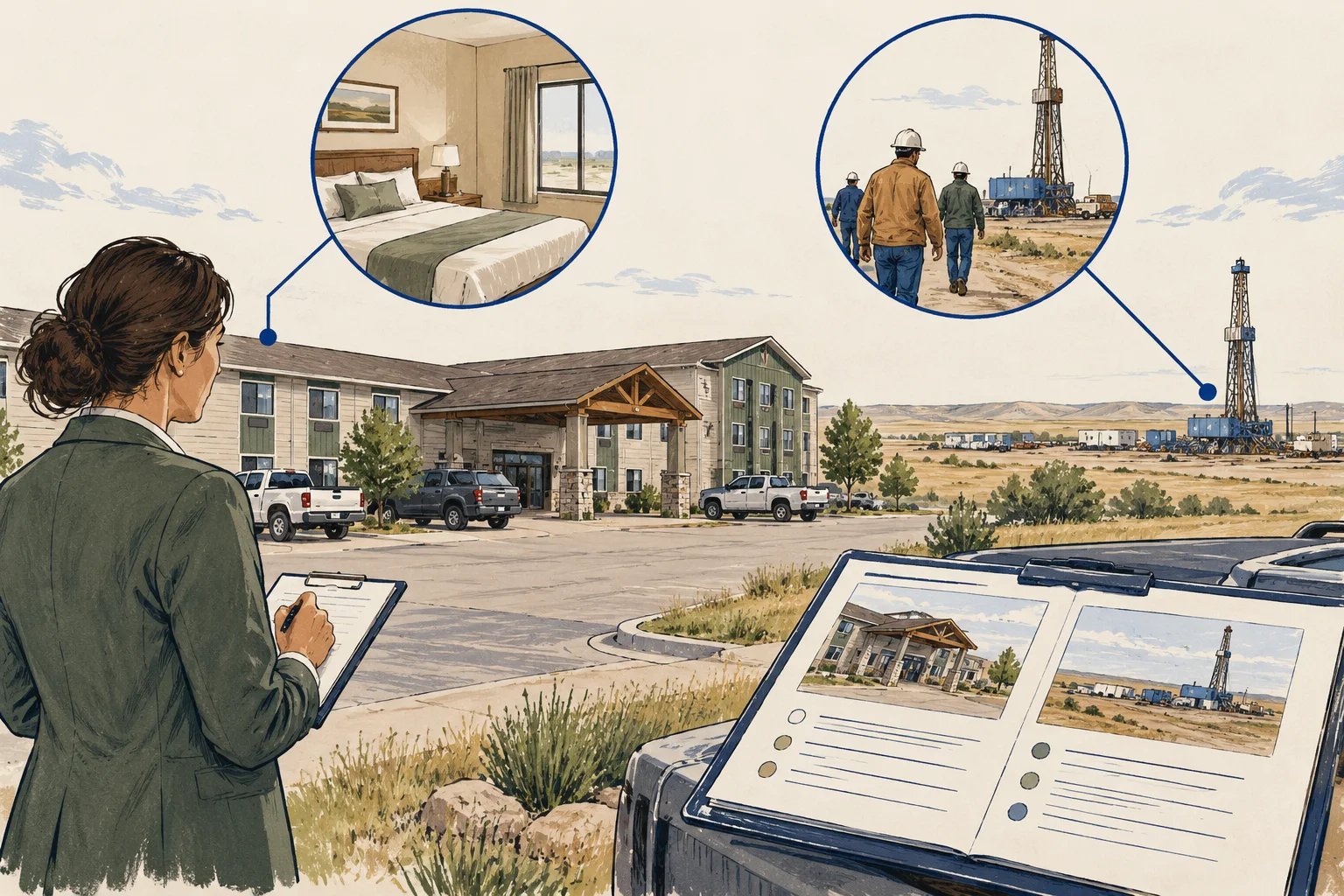
Conceptual illustration of documents and decisions for North Dakota commercial property research

What changes the decision

North Dakota lodging: test the workforce story against the property’s actual room nights

01

The public dashboard is context with a period

North Dakota Commerce’s Industry Dashboards page describes monthly hotel occupancy, Canadian traffic and Theodore Roosevelt National Park visitation, and provides dated report archives. These indicators cover different activities. Retain the period and geography for the selected report rather than treating the directory or the latest visible file as a current property-level forecast.

Source 1
02

Workforce demand must be demonstrated separately

Ask the operator which occupied nights came from crew arrangements and which came from other segments. Request the contract or booking evidence behind material concentrations. A general economic narrative cannot establish that a particular hotel has recurring contracted demand, and a contract name alone does not establish the nights actually paid for.

03

Availability changes the denominator

Reconcile rooms offered for sale, rooms out of service and closures for each period before comparing occupancy. Preserve the operator’s original measure and explain adjustments separately. A seasonal change in availability can make a headline occupancy comparison misleading even when the underlying room-night records are accurate.

Read the records together

Evidence and its investment use

EvidenceWhat it establishesNext decision
State tourism dashboardA dated aggregate indicator with its stated scope.Use it to frame questions about the hotel’s own demand mix.
Property room-night recordsThe supplied availability and occupied-night history.Reconcile closures and segment definitions before comparison.
Crew or corporate agreementsThe documented terms of a particular customer arrangement.Compare commitments, actual usage and concentration exposure.
Conceptual illustration of the North Dakota research workflow

Put it to work

Lodging demand-evidence bridge

The kit is a demand-evidence worksheet, not a forecast model. It helps the buyer decide whether the workforce narrative is supported by operating records and which questions should go to the operator.

  1. Choose comparable periods

    Request monthly operating exports that identify available rooms, occupied room nights and out-of-service inventory. Fix the reporting dates before reviewing trends. Ask the operator to explain changes in definitions or systems so a data migration does not appear as a change in demand.

  2. Build the customer-segment bridge

    Group the supplied records into explicitly defined segments, retaining an unclassified category. Reconcile major crew or corporate arrangements to actual occupied nights. Keep booking commitments, cancellations and realized activity distinct, and avoid exposing guest identities in the acquisition summary or shared research worksheet.

  3. Add relevant public context

    Select a dated Commerce dashboard that matches the question and record its scope. Compare the direction of the property’s own data with the contextual indicator without treating either as proof of causation. A mismatch should generate an operator question, not an automatic correction to the property records.

    Source 1
  4. Write the concentration and durability questions

    Identify which operating assumptions depend on a small set of agreements, seasonal periods or unavailable-room treatment. Ask for the documents and reviewer judgment needed to evaluate those dependencies. Export the kit as a focused request list, leaving unverified future demand out of the current-performance description.

Before the next conversation

Questions this review should answer

Can state occupancy establish a hotel’s underwriting occupancy?

It provides context, not a substitute for the property’s records. Match periods and understand the indicator’s coverage before comparing it with the hotel. Use differences to ask about segmentation, closures and location, and retain the property’s verified operating denominator separately.

What evidence supports a workforce-lodging claim?

A clear definition of the segment, attributable room-night records and the relevant customer agreements. Review terms and concentration with the operating and transaction teams. Keep the claim limited to the supplied period and avoid converting a past crew stay into an assumption of continuing contracted demand.

What can AI do with the operating exports?

AI can propose consistent segment labels, flag unexplained availability changes and build an anonymized reconciliation for review. Preserve the underlying record references and an unclassified bucket. An operator should confirm the categories before the output is used to describe customer mix or recurring demand.

From the page to your next task

Start with the useful output.

Lodging demand-period and room-night bridge

Build an editable lodging demand-period and room-night bridge, retain document references and open decisions, then export your team's working file.

Scope: Lodging demand

Bring
A working file name; use a non-sensitive label for your project. Your document references and observations, or leave missing evidence marked unknown.
Leave with
Lodging demand-period and room-night bridge with editable, expandable records and document locators Two fictional worked rows showing mismatches and decisions to review CSV and readable text exports with row provenance, method sources and edition A separate document-request companion with suggested reviewers

Edition 2026-09-30.1

Evidence and scope

Follow each claim to its source.

Industry Dashboards

North Dakota Department of Commerce · Checked 2026-09-30

Directory of dated tourism dashboards and described hotel, traffic and visitation indicators.

  • The directory is not property-level data or a current demand forecast; no dashboard statistic is reused here.
Open original source ↗