

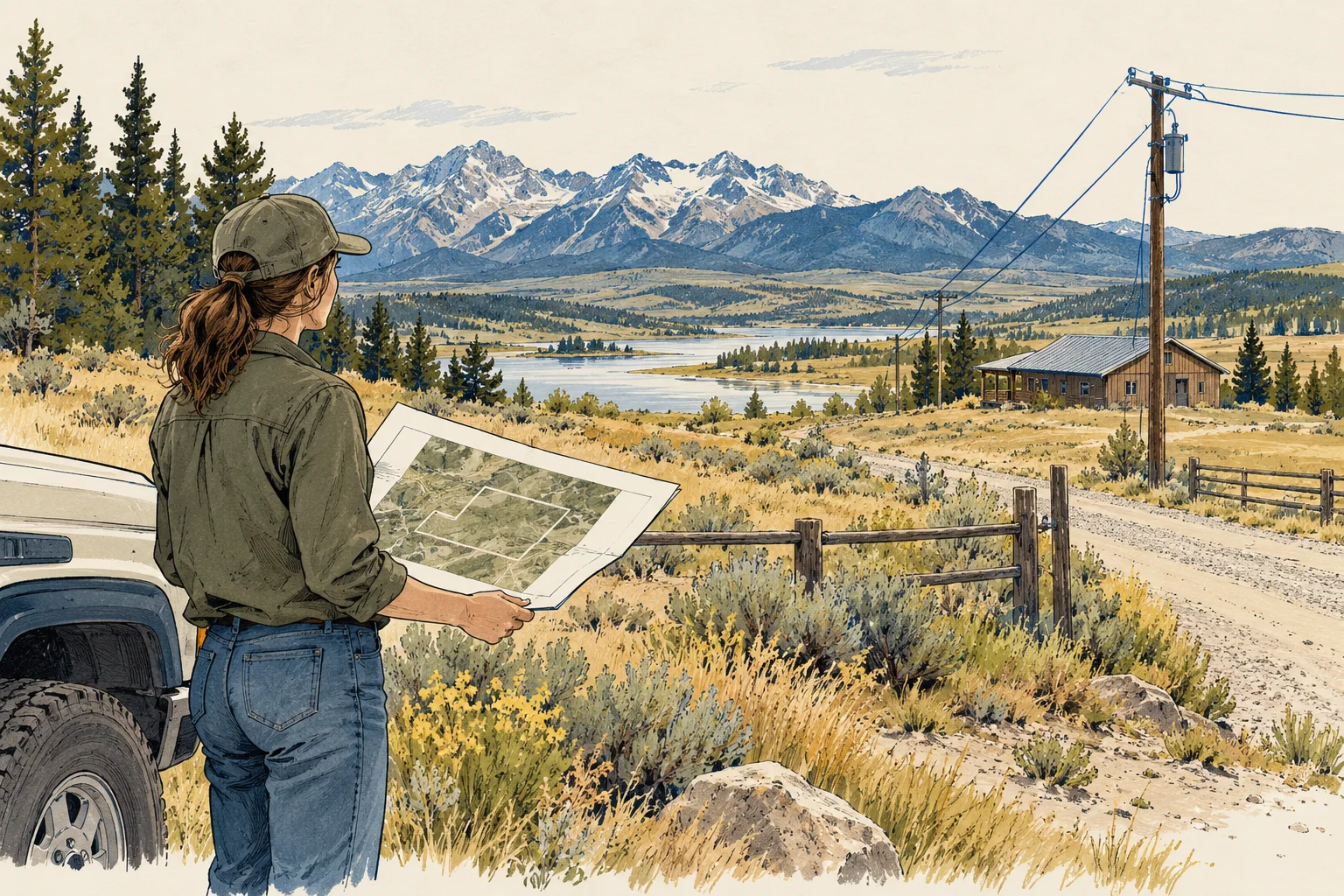
Montana / Water and operating scope

Montana rural property: trace water rights before expansion

A well, a water-right record and a commercial expansion plan answer different questions. For rural Montana property, connect the proposed operation to the actual water-use evidence before building a growth case. Start with the recorded right and its supporting documents, then ask whether the proposed activity, timing and service arrangements match what the acquisition team has been told.

State water-resource guidance informs this editorial method. It is not a water-right opinion, well assessment or inventory of Montana opportunities.

Conceptual illustration of documents and decisions for Montana commercial property research

What changes the decision

Montana rural commercial property: trace the water right before the expansion plan

01

Use the state record to frame the right question

Montana DNRC distinguishes a legal right to use water from ownership of the water itself. Its water-rights page links the query system, ownership updates, application status and regional offices. Use those separate paths to identify what exists, what is being changed and which office can clarify the record, rather than treating a database entry as a complete transaction file.

Source 1
02

The operating plan must describe actual demand

For a rural lodge, service business or recreation property, document seasonal opening, guest or employee use and planned additions. Ask the operator for the assumptions behind its water-demand estimate. That request is more useful than asking whether the property has water, because an existing activity and a larger proposed activity may depend on different evidence.

03

Physical service is another workstream

Keep well construction, testing, storage, treatment and distribution records beside the right file without merging them. A legal document cannot establish current equipment condition. A successful pump test cannot resolve the legal scope of use. Give each specialist a precise question and connect their conclusions only after the references and property boundaries agree.

Read the records together

Evidence and its investment use

EvidenceWhat it establishesNext decision
Recorded right and supporting fileThe documented water-use claim or authorization to review.Match the proposed operation to the file with a qualified reviewer.
Well and system recordsEvidence about physical supply and equipment at a stated time.Determine which condition and performance checks remain necessary.
Expansion operating scheduleThe buyer’s proposed intensity and seasonal pattern.Test that proposal rather than assuming the existing use covers it.
Conceptual illustration of the Montana research workflow

Put it to work

Rural water-use decision file

Build a water-use brief that another reviewer can follow without reconstructing the seller conversation. The kit keeps the right, physical system and proposed operation in separate rows.

  1. Identify the file before extracting conclusions

    Obtain the right identifier and the seller’s supporting documents. Use DNRC’s official query and regional-office route to clarify missing or inconsistent references. Record retrieval dates and distinguish an ownership update from a proposed change in use; do not resolve the difference by matching names alone.

    Source 1
  2. Describe existing and proposed activity

    Write a short schedule showing the operating season, principal uses and intended additions. Separate the present business from the buyer’s concept. Ask the operator and water specialist what measurements or calculations they need, and retain the assumptions used to estimate demand.

  3. Cross-check the physical system

    Request well logs, testing, treatment records and a diagram of the served buildings. Mark shared facilities or off-site components for separate review. Reconcile these descriptions with the acquisition boundary so equipment serving another property is not casually included in the purchase assumptions.

  4. Turn gaps into transaction decisions

    Have the qualified reviewers state which questions they can answer and which need additional documents or testing. Assign each unresolved item to a responsible party. Export the kit as the acquisition request sheet, keeping an unsupported expansion case outside the current-operation summary.

Before the next conversation

Questions this review should answer

Does a parcel record prove that the water right transfers with the deal?

A parcel record is not enough to settle that question. Ask the transaction’s water-right and title reviewers to examine the actual documents and proposed conveyance. Record their conclusion and cited instruments instead of inferring transferability from common ownership or a nearby well symbol.

Why retain both the right file and system records?

They support different parts of the commercial decision. The right file informs the legal-use review; system records inform physical service and condition. Keeping both prevents an attractive expansion drawing from hiding the missing test, document or clarification that actually controls feasibility.

What should AI extract from the documents?

Use AI to produce a referenced chronology, identify inconsistent identifiers and compare the described existing and proposed uses. Require a document location for every extracted fact. Leave interpretation of rights and technical supply adequacy to the relevant reviewers, with their judgments recorded separately.

From the page to your next task

Start with the useful output.

Water-right-to-seasonal-demand bridge

Build an editable water-right-to-seasonal-demand bridge, retain document references and open decisions, then export your team's working file.

Scope: Rural water-use

Bring
A working file name; use a non-sensitive label for your project. Your document references and observations, or leave missing evidence marked unknown.
Leave with
Water-right-to-seasonal-demand bridge with editable, expandable records and document locators Two fictional worked rows showing mismatches and decisions to review CSV and readable text exports with row provenance, method sources and edition A separate document-request companion with suggested reviewers

Edition 2026-09-30.1

Evidence and scope

Follow each claim to its source.

Water Rights

Montana Department of Natural Resources and Conservation · Checked 2026-09-30

State water-right query, application, ownership and regional-office resource paths.

  • The landing page is not an individual right file or a determination of water availability or transferability.
Open original source ↗