

Michigan / Environmental file history

Michigan industrial reuse: read the environmental chronology

For a Michigan industrial reuse acquisition, organize environmental evidence as a chronology tied to the proposed use. A map entry, a Baseline Environmental Assessment and later management documents each have a different role. Ask the environmental professional to explain what the actual file supports and what the buyer’s plan still requires, then carry those unresolved items into the acquisition work program.

Michigan EGLE guidance checked September 30, 2026. The page provides an evidence workflow, not a liability opinion, environmental assessment or cleanup determination.

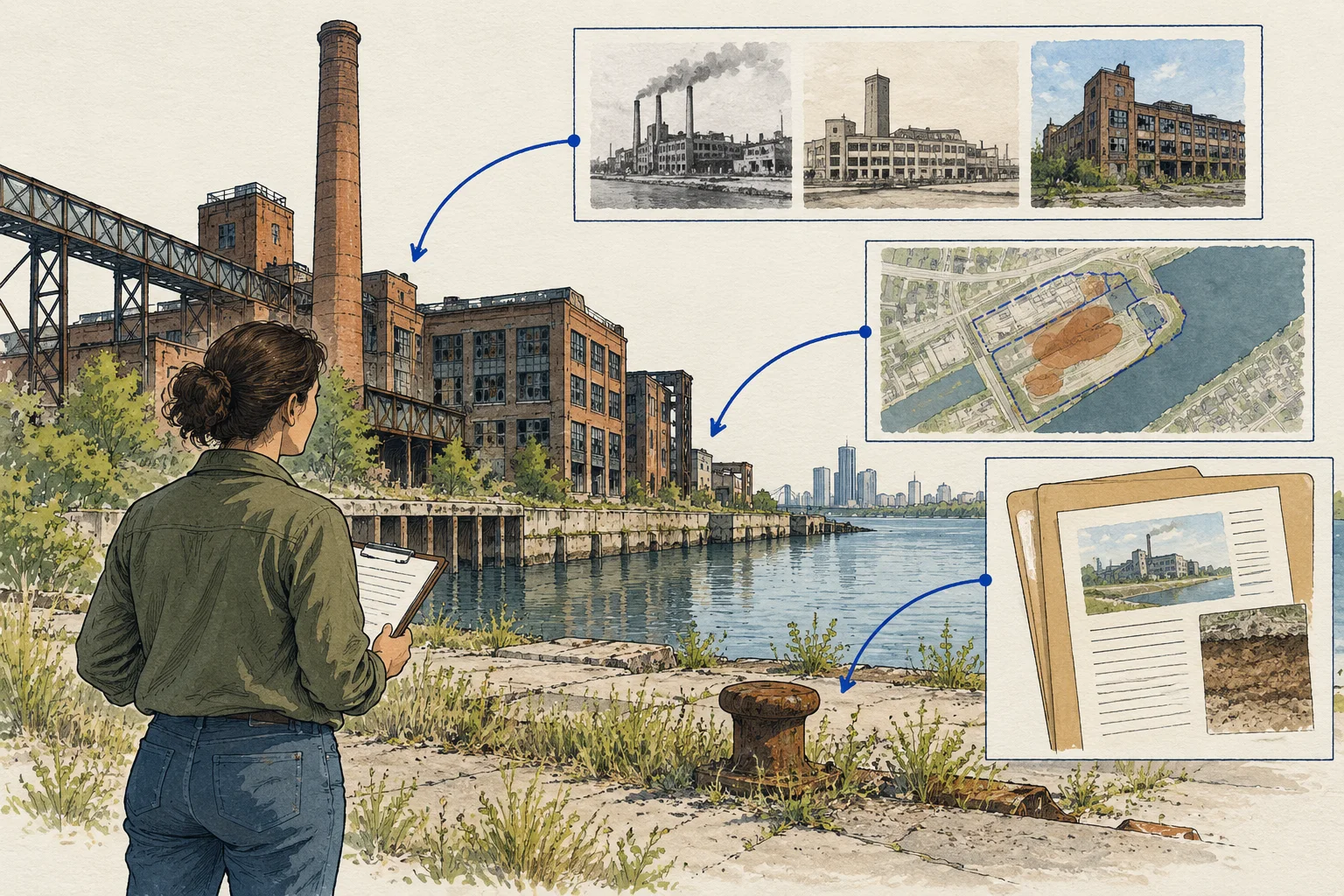
Conceptual evidence illustration for Michigan: industrial environmental chronology. No surveyed geography or real property depicted.

Start with the right evidence

What changes the decision

01

A BEA needs its underlying document

EGLE provides Baseline Environmental Assessment information and routes for submission and records access. Request the actual document, its date and the premises it describes. A reference in a seller folder should not be treated as proof that the buyer has reviewed its scope or that every relevant condition has been resolved.

Source 1
02

Maps are program entry points

EGLE organizes environmental maps and data through multiple resources. Record the program, layer and search context when using one to locate a file. A clean-looking screen or a missing result should not become a whole-property clearance statement; the professional review should explain any material coverage or historical gaps.

Source 1
03

Proposed use changes the review brief

Describe planned excavation, occupancy, demolition or continued industrial activity, as applicable. Ask the professional to identify the evidence and management questions relevant to that plan. Keep a historical assessment’s findings separate from current conditions and from the practical measures the buyer may need to consider.

Different records, different questions

Keep these decisions separate

EvidenceUseful questionNext document
Map or database entryWhich program and underlying file are relevant?Source record and complete referenced documents.Source 1
Baseline assessmentWhat property, date and conditions does the report address?The actual BEA and specialist explanation of its scope.Source 1
Current reuse planWhat additional review or management questions follow from the proposal?Environmental professional’s documented recommendations and required follow-up records.
Conceptual Michigan research sequence, not a factual map or property inspection.

An acquisition desk workflow

Build a reviewable file

Use these steps as an editorial research method. The worksheet records what your documents support and assigns a next action to what remains unresolved.

  1. Build the property-use chronology

    Ask the seller for prior operating uses, significant physical changes and relevant environmental documents. Place each item on a dated timeline without equating age with irrelevance. Identify the proposed next use separately so reviewers can compare historical evidence with the acquisition’s actual plan instead of a generic industrial label.

  2. Use EGLE resources to locate the file

    Choose the relevant program maps or record path and keep the search context. Where a BEA is referenced, follow EGLE’s records-access guidance to request the actual document as appropriate. Record missing items explicitly; an index entry should remain an index entry until the supporting file has been reviewed.

    Source 1Source 2
  3. Ask for an interpretation tied to the proposal

    Give the environmental professional the chronology and proposed works. Request a concise account of what the documents establish, what remains uncertain and which further review is appropriate. Assign legal conclusions to qualified counsel and technical findings to the professional rather than generating them from the presence of a BEA.

  4. Export an acquisition action list

    The worksheet separates source-file identity, BEA scope, later documents and proposed-use dependencies. Attach page references to material observations and identify the reviewer responsible for each open issue. Export the requests before treating environmental work as a fixed budget item or describing the property as cleared for a particular reuse.

Before the next request

Questions worth resolving

Does a BEA mean a Michigan property has been cleaned up?

Do not treat the document label as that conclusion. Obtain the actual assessment and any later records, then ask the environmental professional what they establish. EGLE’s guidance distinguishes assessment and related responsibilities; a property-specific legal or technical conclusion requires review beyond a document’s existence.

Source 1
Can a map search replace the environmental review?

No. Maps can locate relevant program records and reveal questions to investigate. Record which resource was checked and preserve gaps or unmatched history. The acquisition needs a review of the actual evidence and proposed use, not a broad clean-site claim generated from the presence or absence of map symbols.

Source 1
How can AI support a Michigan reuse review?

Use it to build a dated index of supplied BEA, EGLE correspondence and later site documents, keeping each observation linked to a page. Ask it to flag mismatched premises or unsupported cleanup language. The environmental professional interprets conditions and needed work; counsel handles liability and transaction-specific legal conclusions.

Source 1Source 2

From the page to your next task

Start with the useful output.

Industrial environmental document chronology

Build an editable industrial environmental document chronology, retain document references and open decisions, then export your team's working file.

Scope: Michigan EGLE guidance checked September 30, 2026. The page provides an evidence workflow, not a liability opinion, environmental assessment or cleanup determination.

Bring
Your case name Document status, observations and references for each evidence row
Leave with
Industrial environmental document chronology with editable, expandable records and document locators Two fictional worked rows showing mismatches and decisions to review CSV and readable text exports with row provenance, method sources and edition A separate document-request companion with suggested reviewers

Edition 2026-09-30.1

Evidence and scope

Follow each claim to its source.

Baseline Environmental Assessments

Michigan Department of Environment, Great Lakes, and Energy · Checked 2026-09-30

BEA information, submission resources, records requests and related due-care guidance.

  • A BEA reference or submission is not a cleanup certificate, property-specific liability opinion or confirmation of all current conditions.
Open original source ↗
Maps and Data

Michigan Department of Environment, Great Lakes, and Energy · Checked 2026-09-30

Program-specific environmental maps and data entry points.

  • Layer coverage and records differ by program; no map result certifies an industrial site for reuse.
Open original source ↗