

Iowa / Historical site evidence

Iowa site reuse: organize the environmental record history

When an Iowa land or industrial opportunity has a former agricultural-service, fuel or manufacturing use, start with a dated activity history. Then route the environmental questions to the relevant records. A search result can locate a file, but the acquisition team needs to know what was studied, what the record says and what remains outside its scope before relying on a reuse assumption.

Iowa DNR record and brownfield guidance checked September 30, 2026. The method does not designate a property as contaminated, clean or eligible for assistance.

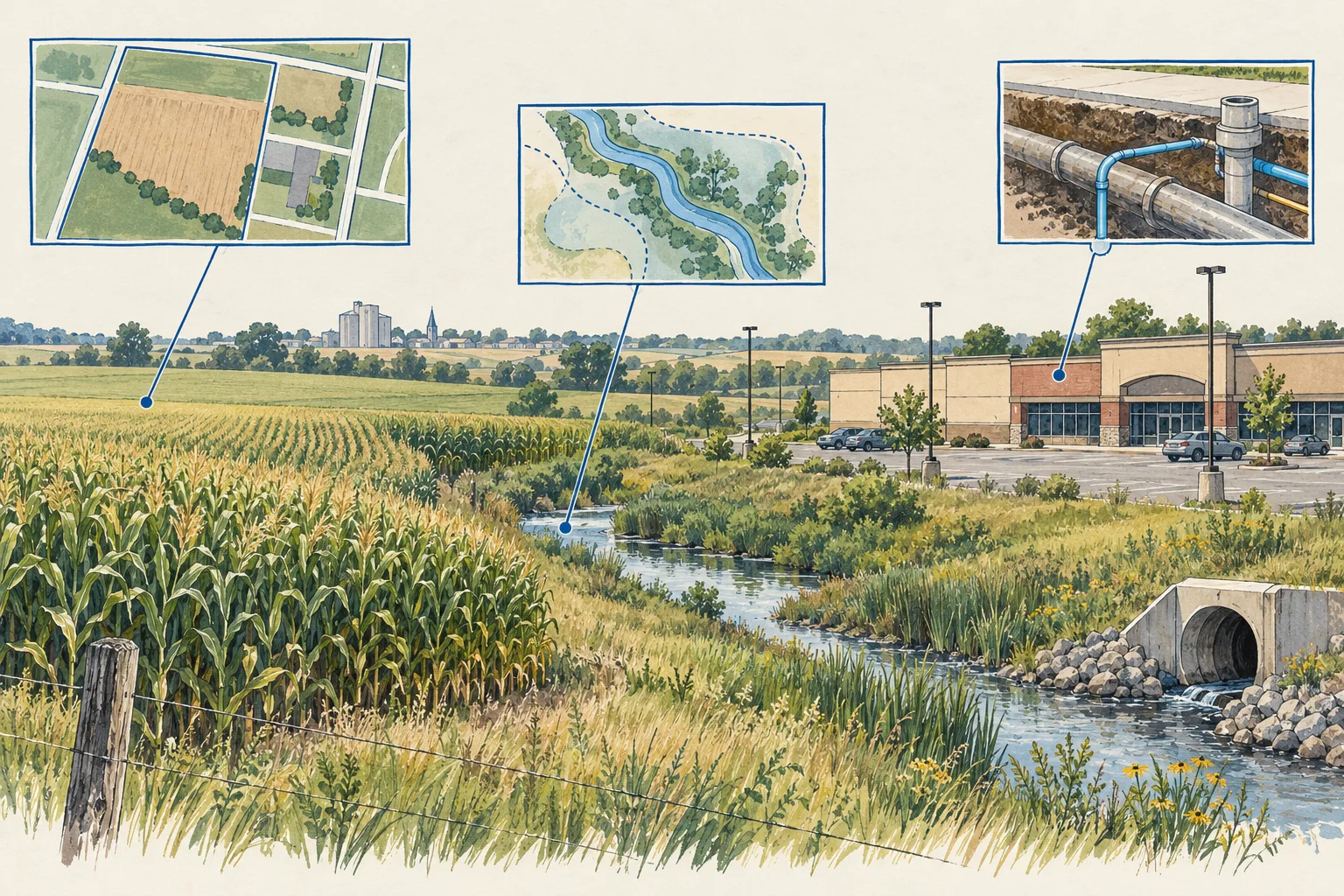
Conceptual evidence illustration for Iowa: historical use and environmental files. No surveyed geography or real property depicted.

Start with the right evidence

What changes the decision

01

Program boundaries change the search

Facility Explorer offers program and status filters. Iowa DNR also distinguishes petroleum-tank information from its contaminated-sites records. Preserve the database and filters used so an empty result is described accurately. A no-match in one program should not become a statement about every historical activity at the property.

Source 1Source 2
02

A listing is a reason to read the file

DNR explains that a contaminated-sites listing may reflect data collection and agency review rather than a current concern. Ask what the relevant documents actually establish. Keep a historical entry, a reported condition and a documented later action separate instead of assigning a blanket risk label from the database presence.

Source 1
03

Proposed reuse gives the review a purpose

Describe whether the plan involves continued storage, demolition, excavation or another activity. Ask the environmental professional to identify which records and investigation are relevant to that scenario. The same historical file can raise different practical questions depending on what the buyer intends to do with the land or building.

Different records, different questions

Keep these decisions separate

EvidenceUseful questionNext document
Historical activityWhat was done at the property, and during which period?Seller chronology, historical plans and the consultant’s source review.
Agency database entryWhich program and file does the result identify?Underlying documents, with dates and their described scope.Source 1Source 2
Reuse scenarioWhat decisions or further investigation does the proposed activity require?Environmental professional’s review scope and a documented next-step recommendation.
Conceptual Iowa research sequence, not a factual map or property inspection.

An acquisition desk workflow

Build a reviewable file

Use these steps as an editorial research method. The worksheet records what your documents support and assigns a next action to what remains unresolved.

  1. Build an activity timeline

    Ask the seller for former uses, structures, fuel or material storage and major physical changes. Keep each statement tied to its source and date. The purpose is to give the environmental reviewer a clear set of questions, not to label ordinary agricultural or industrial history as evidence of contamination.

  2. Search the relevant record paths

    Use Facility Explorer with the appropriate program and status settings, then consult the separate record routes identified in DNR’s guidance when relevant. Log what was searched and what was not. If an earlier tank or activity falls outside available records, assign a history-review request instead of treating silence as clearance.

    Source 1Source 2
  3. Read the dated file with the reuse plan

    Request the actual agency correspondence and assessment documents for relevant matches. Ask the consultant to distinguish observations, conclusions, subsequent actions and unresolved questions. Include the proposed activity so the review addresses the acquisition’s intended use rather than merely repeating a historical database label.

  4. Export a targeted investigation brief

    Use the worksheet to organize the activity history, program coverage, file interpretation and proposed-use questions. Assign technical conclusions to the environmental professional. The resulting text or CSV should show the documents still needed and the decision they affect, without creating a cleanup estimate or a risk score from incomplete information.

Before the next request

Questions worth resolving

Does a DNR listing mean an Iowa property is currently contaminated?

Not necessarily. DNR specifically explains that a listing may reflect environmental information collected and reviewed. Read the underlying documents and ask a qualified professional to assess their relevance to the property and proposed use. Preserve the record’s wording and date rather than converting a listing into a current diagnosis.

Source 1
Does no result mean the former use is irrelevant?

No. Record the programs, filters and periods checked, then ask the professional reviewer about history outside that search scope. DNR notes limits in some historical tank records. The useful conclusion is what the search did and did not cover, followed by a concrete request for any material gap.

Source 1Source 2
How can AI support an Iowa environmental-record review?

Use AI to index Facility Explorer matches and supplied DNR files by program, date and document reference, then compare that index with the site’s activity timeline. Ask it to preserve separate petroleum-tank and contaminated-site paths and flag unexplained history gaps. The environmental professional interprets findings and sets the scope of any further investigation.

Source 1Source 2

From the page to your next task

Start with the useful output.

Historical activity-to-program-file register

Build an editable historical activity-to-program-file register, retain document references and open decisions, then export your team's working file.

Scope: Iowa DNR record and brownfield guidance checked September 30, 2026. The method does not designate a property as contaminated, clean or eligible for assistance.

Bring
Your case name Document status, observations and references for each evidence row
Leave with
Historical activity-to-program-file register with editable, expandable records and document locators Two fictional worked rows showing mismatches and decisions to review CSV and readable text exports with row provenance, method sources and edition A separate document-request companion with suggested reviewers

Edition 2026-09-30.1

Evidence and scope

Follow each claim to its source.

Facility Explorer

Iowa Department of Natural Resources · Checked 2026-09-30

Facility discovery by location, identifier and program, with active and all-facility options.

  • A result depends on the selected program and filters; it does not establish the complete history of a site.
Open original source ↗
Brownfield Redevelopment

Iowa Department of Natural Resources · Checked 2026-09-30

Brownfield guidance and distinctions between contaminated-site and petroleum-tank records.

  • A database listing is not necessarily a current concern, and unlisted or older activity may require separate investigation.
Open original source ↗