

Washington / Energy-record boundaries

Washington building energy: reconcile the reporting boundary

An energy record becomes useful to a Washington property buyer when the building and meter boundaries are clear. Start by identifying the structures, areas and uses represented in the record, then reconcile them with the acquisition and operating files. Obtain owner-authorized evidence for the relevant program review instead of treating a public dashboard or a property name as proof that the building’s obligations and performance are resolved.

Washington Commerce’s Clean Buildings Portal guidance informs this method. No building account, benchmark, program-applicability decision or compliance status was accessed.

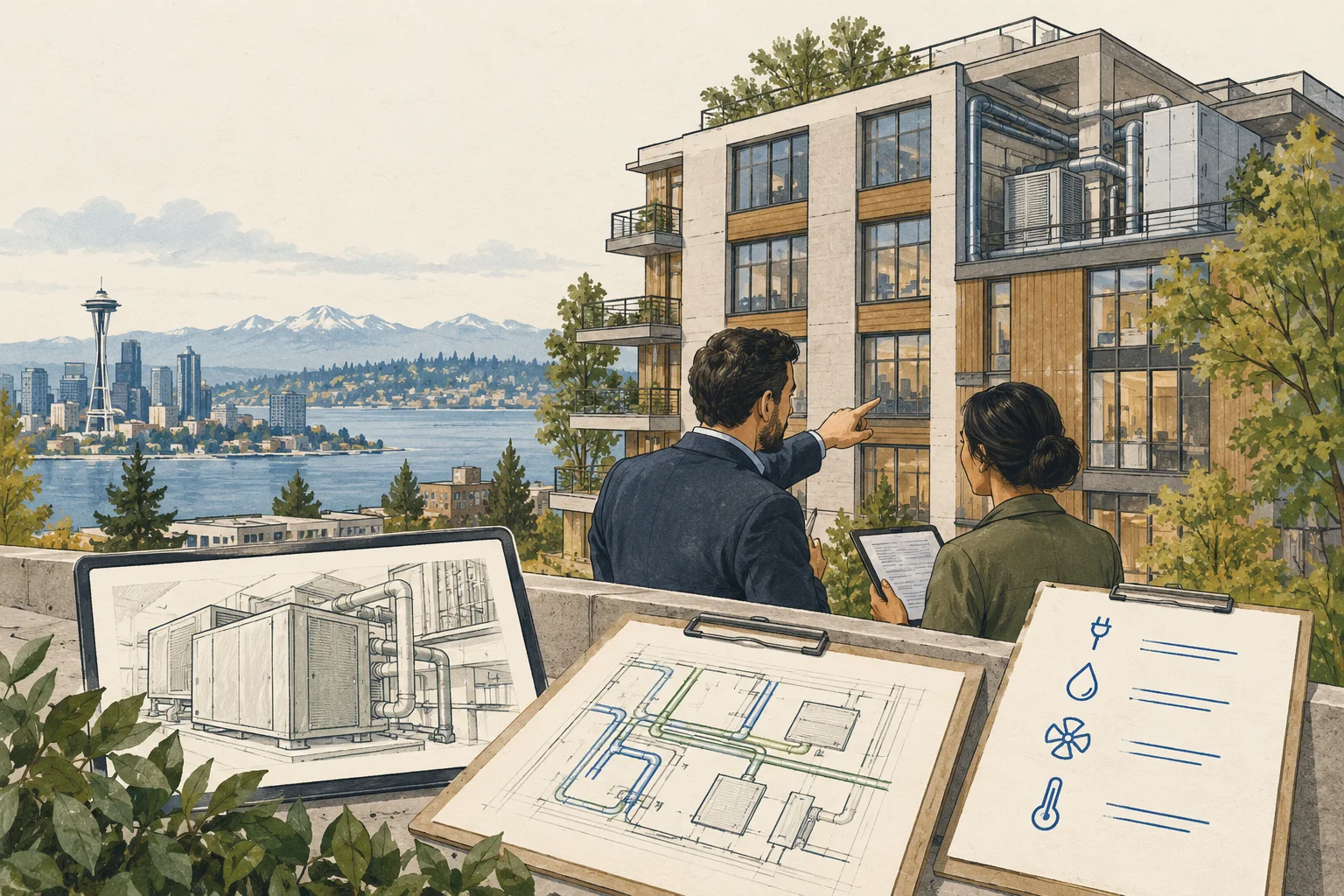
Conceptual illustration of documents and decisions for Washington commercial property research

What changes the decision

Washington building energy review: reconcile the building boundary before reading the result

01

The portal is an owner-record workflow

Commerce describes a secure Clean Buildings Portal with owner access and a process for correcting building information. Its public dashboard serves a different purpose. For an acquisition, request the relevant export and correspondence from an authorized owner representative rather than assuming that public visibility means the underlying building file is open or has been reviewed.

Source 1
02

One property can contain several energy boundaries

Create a schedule of buildings, floor areas, uses and meters using the owner’s records. Identify shared meters, tenant meters and excluded structures. Keep the physical property boundary separate from the boundary used in an energy submission so a campus-level bill or mixed-use record is not misrepresented as the performance of one acquired building.

03

An evidence gap is different from a poor result

A missing meter mapping, incorrect building description or incomplete period may make a result hard to interpret. Request clarification before assigning an investment meaning to it. Have the relevant energy professional explain the record’s scope and the remaining work, while the acquisitions team tracks the cost and responsibility questions that follow.

Read the records together

Evidence and its investment use

EvidenceWhat it establishesNext decision
Public program informationThe described program resources and access process.Identify the owner-authorized evidence needed for this building.
Building and meter scheduleThe physical and reporting boundaries represented in the file.Reconcile shared systems, uses and excluded areas.
Owner file and reviewer interpretationThe supplied project-specific evidence and attributed judgment.Identify applicable tasks and unresolved acquisition responsibilities.
Conceptual illustration of the Washington research workflow

Put it to work

Building and meter evidence review

The worksheet prepares a focused energy-document request for an owner or their authorized adviser. It does not connect to an account, change records or calculate a compliance result.

  1. Identify the acquired structures

    Build a plan-linked schedule of the buildings and areas included in the transaction. Record current uses and any structures whose treatment is unclear. Ask the property manager to reconcile the schedule with existing energy records before using a building name or street address as the sole match.

  2. Request authorized program evidence

    Ask the owner or authorized representative for the relevant Commerce portal records and correspondence. Follow the official access and correction process where needed, without sharing credentials or access codes in the research worksheet. Record which version was supplied and whether any correction remains unresolved.

    Source 1
  3. Reconcile meters and reporting periods

    Request the meter schedule and supporting utility records for the period under review. Identify shared supplies and changes in occupancy or equipment that the energy professional should consider. Preserve missing periods and allocation assumptions rather than filling them with invented usage or treating them as zero.

  4. Assign the building-specific review

    Give the energy professional the reconciled boundaries and supplied program file. Ask for an attributed conclusion about the applicable tasks and data gaps. Export the kit with responsibilities and supporting references so the buyer can distinguish verified information, professional judgment and outstanding owner requests.

Before the next conversation

Questions this review should answer

Can I establish a building’s status from the public dashboard?

Use the dashboard only within its stated public scope. The acquisition question needs the relevant owner-supplied building records and a qualified interpretation. A public listing or aggregate view does not replace the record that explains boundaries, corrections and the specific tasks applicable to the property.

Why reconcile meters before reviewing an energy figure?

The figure must correspond to the intended building and period. Shared meters, multiple structures and tenant arrangements can change what it represents. Preserve those relationships explicitly so the energy professional can interpret the evidence instead of assuming every bill belongs entirely to the acquired space.

Where can AI help with Washington building records?

AI can match building labels to meter schedules, flag missing periods and compare owner exports with correction correspondence. Keep source references and avoid uploading credentials. An energy professional should approve the boundary and interpretation before the output informs acquisition responsibilities or performance claims.

From the page to your next task

Start with the useful output.

Building-meter-period crosswalk

Build an editable building-meter-period crosswalk, retain document references and open decisions, then export your team's working file.

Scope: Building energy

Bring
A working file name; use a non-sensitive label for your project. Your document references and observations, or leave missing evidence marked unknown.
Leave with
Building-meter-period crosswalk with editable, expandable records and document locators Two fictional worked rows showing mismatches and decisions to review CSV and readable text exports with row provenance, method sources and edition A separate document-request companion with suggested reviewers

Edition 2026-09-30.1

Evidence and scope

Follow each claim to its source.

Clean Buildings Portal

Washington State Department of Commerce · Checked 2026-09-30

Owner portal access, building-information correction and distinction from public dashboard resources.

  • No authenticated owner records were accessed; the guide does not establish a building’s coverage, performance or compliance.
Open original source ↗