

Maryland / Care and real-estate identity

Maryland assisted living: separate care and property records

A Maryland assisted-living acquisition needs an operating record and a property record that are connected without being collapsed into one. Identify the licensed program, its premises and the real estate interest being offered. Then keep licensed capacity, actual occupancy and the buyer’s proposed operating changes in separate fields before evaluating the business or building.

Maryland OHCQ and SDAT guidance checked September 30, 2026. No resident records, facility-level license searches or property ownership matches were performed.

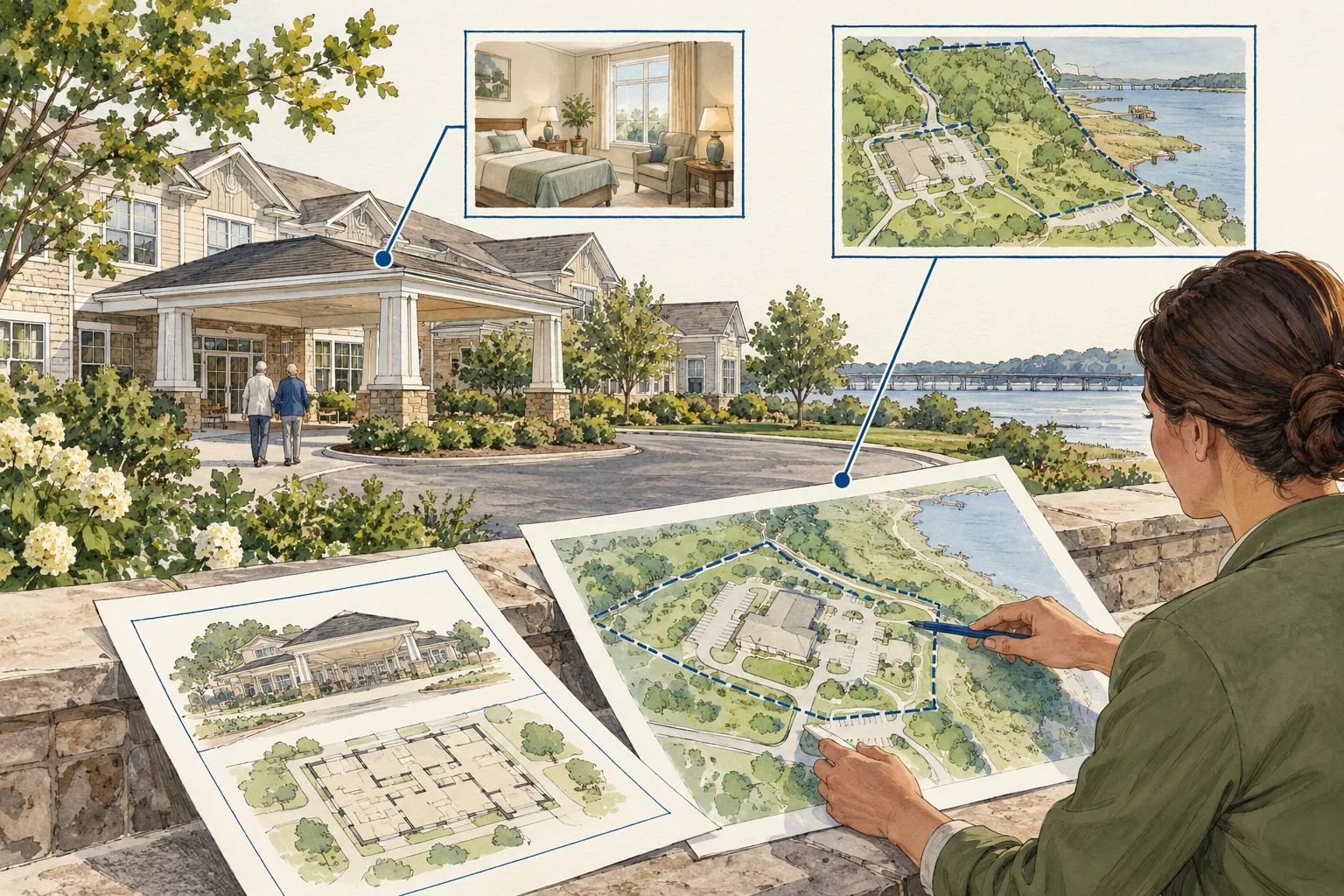
Conceptual evidence illustration for Maryland: care program and property identity. No surveyed geography or real property depicted.

Start with the right evidence

What changes the decision

01

Capacity and care level belong to the operating file

OHCQ provides assisted-living resources for matters including bed and care-level changes. That makes the current program document and its scope important acquisition requests. A capacity figure should not become an occupied-bed count, a rentable-unit count or permission for the buyer’s proposed operating change without its own evidence.

Source 1
02

Property identity uses a different identifier

SDAT explains property lookup routes and local account formats. Preserve the county and account reference when identifying the real estate. Match the operating premises carefully rather than assuming that a program’s mailing address or trade name identifies the assessed property or the party selling it.

Source 1
03

Real estate and care changes need coordinated review

Ask the operating adviser to describe the proposed care program and the building team to describe the premises it would occupy. Compare the two before budgeting alterations or additional beds. These are proposed review tasks, not a statement that a particular facility may expand or change its level of care.

Different records, different questions

Keep these decisions separate

EvidenceUseful questionNext document
OHCQ program documentWhich operator, premises and capacity does the record describe?Actual current program documents and relevant change correspondence.Source 1
SDAT property recordWhich assessed real estate is linked to the offered premises?County/account reference and the transaction’s title or parcel evidence.Source 1
Acquisition operating planWhat would change under the buyer’s proposal?Operator and building review of the proposed program, premises and dependencies.
Conceptual Maryland research sequence, not a factual map or property inspection.

An acquisition desk workflow

Build a reviewable file

Use these steps as an editorial research method. The worksheet records what your documents support and assigns a next action to what remains unresolved.

  1. Define the business and property interests

    Ask whether the offer includes the land, the operating business, a lease or a combination. Identify the parties and premises separately. This prevents a real estate investment description from silently inheriting the licensed operator’s responsibilities or assuming that the care business will continue unchanged after the transaction.

  2. Obtain the actual care-program record

    Use OHCQ’s provider resources to frame the request for the facility’s program documents and relevant changes. Record dates, premises, capacity and care scope exactly as supplied. Ask the operating specialist to resolve contradictions rather than inferring permitted activity from a website description or a marketing bed count.

    Source 1
  3. Reconcile the premises with the tax record

    Use SDAT’s lookup guidance to identify the relevant county and account reference, then request the property’s supporting transaction documents. If several buildings or accounts are involved, keep their relationship explicit. The join should show which space the care program uses without treating the assessment boundary as the operating boundary.

    Source 1
  4. Export a coordinated review brief

    The worksheet separates program scope, property identity, occupancy evidence and proposed changes. Assign the operating and building questions to their respective reviewers. Keep any resident-level information outside the public-facing file and use appropriately scoped aggregate operating records when needed. The export creates specific requests, not a licensing or investment recommendation.

Before the next request

Questions worth resolving

Does a licensed bed count establish current occupancy?

No. It describes a capacity field within its own record and period. Ask for appropriately scoped operating evidence to understand actual occupancy, keeping personal resident information out of the general research file. Preserve the distinction before calculating performance or comparing a marketing count with the acquisition’s operating plan.

Source 1
Does an SDAT owner name identify the care operator?

Not necessarily. Establish the relationship through the lease or other relevant transaction documents. SDAT is a property-assessment path, while OHCQ’s materials concern the care program. A match on name or address can frame a question, but it does not replace evidence of the parties' actual roles.

Source 1Source 2
How can AI help with a Maryland assisted-living file?

Use it to compare the OHCQ program’s premises and capacity fields with the SDAT county/account reference and a supplied building schedule. Have it flag mismatched addresses or unexplained counts, without importing resident data. The operating adviser resolves care scope; the property and transaction reviewers resolve the real estate relationship.

Source 1Source 2

From the page to your next task

Start with the useful output.

Care-program-to-property crosswalk

Build an editable care-program-to-property crosswalk, retain document references and open decisions, then export your team's working file.

Scope: Maryland OHCQ and SDAT guidance checked September 30, 2026. No resident records, facility-level license searches or property ownership matches were performed.

Bring
Your case name Document status, observations and references for each evidence row
Leave with
Care-program-to-property crosswalk with editable, expandable records and document locators Two fictional worked rows showing mismatches and decisions to review CSV and readable text exports with row provenance, method sources and edition A separate document-request companion with suggested reviewers

Edition 2026-09-30.1

Evidence and scope

Follow each claim to its source.

Assisted Living Providers

Maryland Office of Health Care Quality · Checked 2026-09-30

Assisted-living licensing resources and change requests for beds, care levels and program details.

  • Licensed capacity is not occupancy, real estate ownership or a guarantee about an acquisition plan.
Open original source ↗
Finding Your Property Information Online

Maryland Department of Assessments and Taxation · Checked 2026-09-30

Property lookup methods and local account-identifier guidance.

  • Assessment lookup identifies the tax record; it does not establish care operations, residents or operator authority.
Open original source ↗