

District of Columbia / Building records

DC office review: align energy and occupancy records

For a District of Columbia office acquisition, connect the energy story to the same building and period as the occupancy story. A benchmarking result may describe performance while a permit or occupancy record describes a different boundary or use. Build a paired record before interpreting a low metric, pricing improvements or presenting a conversion thesis.

District agency record pathways checked September 30, 2026. No building benchmark, compliance status or conversion outcome was independently assessed.

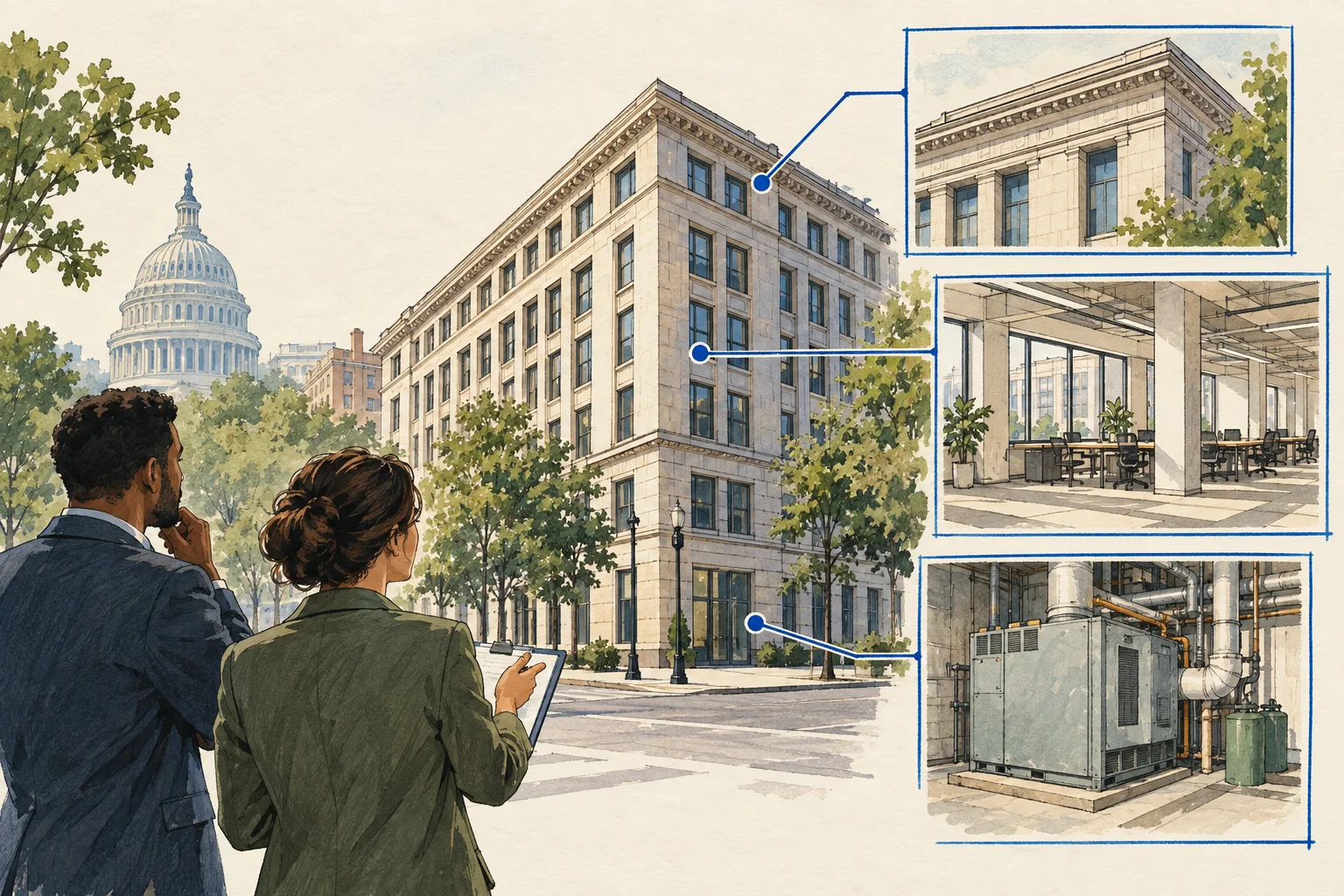
Conceptual evidence illustration for District of Columbia: building performance and occupancy. No surveyed geography or real property depicted.

Start with the right evidence

What changes the decision

01

Benchmarking has a reporting boundary

DOEE describes annual energy and water benchmarking and public disclosure. Carry the report year and the building represented alongside any metric. Ask for the supporting area and operating context before comparing it with another asset; a reported number is not a diagnosis of the equipment or an estimate of renovation cost.

Source 1
02

An application and an issued record differ

DOB lists Scout for public records and separate tools for certificates of occupancy and plan review. Use the record type and status in the working file. A submitted application is evidence of a process, not evidence that the requested use has been approved or that the work has been completed.

Source 1
03

Connect physical scope before drawing conclusions

Ask whether the benchmark, lease plan and occupancy document cover the same structure or premises. A campus, a shared system or a partial-building report can change the comparison. Document the mismatch and request clarification instead of using an address match to treat every record as a whole-building statement.

Different records, different questions

Keep these decisions separate

EvidenceUseful questionNext document
Benchmark disclosureWhat period and reporting boundary does the performance figure cover?Supporting area, use and meter information from the reporting party.Source 1
DOB recordWhat document was issued or requested, for which premises?The actual permit or occupancy document with date and status.Source 1
Improvement conceptWhich intervention could explain or change the observed performance?An engineer’s assessment and a separately costed scope.
Conceptual District of Columbia research sequence, not a factual map or property inspection.

An acquisition desk workflow

Build a reviewable file

Use these steps as an editorial research method. The worksheet records what your documents support and assigns a next action to what remains unresolved.

  1. Define the building being acquired

    List the structures, premises and shared systems included in the offer. Request the lease plan and building schedule before importing performance figures. If a reporting identifier covers a different boundary, retain it as a related record and explain the difference rather than forcing a single building match.

  2. Capture the benchmark with context

    Use DOEE’s benchmarking pathway to locate the relevant reporting information. Keep the year, metric and reported boundary together, then ask the owner for supporting area and operating assumptions. Distinguish a missing or unclear input from poor measured performance; each requires a different follow-up question.

    Source 1
  3. Read the actual occupancy and permit documents

    Use DOB’s application directory to choose the relevant record route, such as Scout or certificate-of-occupancy services. Request the issued document rather than relying on a search label. Compare the described premises and use with the seller’s plan and record unresolved differences for the appropriate local or professional reviewer.

    Source 1
  4. Turn the comparison into a work program

    Ask the engineer to separate measurement questions from potential physical improvements, and ask the development team to identify any use-review dependency. The worksheet export keeps document status, building scope and proposed work together. It supports a more precise next request without claiming a compliance or conversion result.

Before the next request

Questions worth resolving

Does an energy score explain the cause of a building’s performance?

Not by itself. First resolve the reporting year, boundary, area and operational context, then ask an engineer what investigation is appropriate. The guide uses benchmarking to frame questions. It does not diagnose equipment, calculate retrofit savings or infer investment returns from a disclosed figure.

Source 1
Can a permit application prove an office is approved for another use?

No. Preserve the distinction between a submission, review status and issued document. Obtain the relevant document and ask the responsible reviewer what it establishes for the specific premises. DOB’s tool directory helps route that work; it does not approve a conversion through a search result.

Source 1
How can AI connect DC building-performance and occupancy evidence?

Use AI to compare the DOEE reporting year and building boundary with the premises described in supplied DOB records and lease plans. Have it distinguish an application from an issued document and flag mismatched areas. The energy engineer interprets performance; the building or permit adviser resolves occupancy scope and any proposed-use dependency.

Source 1Source 2

From the page to your next task

Start with the useful output.

Building boundary and occupancy bridge

Build an editable building boundary and occupancy bridge, retain document references and open decisions, then export your team's working file.

Scope: District agency record pathways checked September 30, 2026. No building benchmark, compliance status or conversion outcome was independently assessed.

Bring
Your case name Document status, observations and references for each evidence row
Leave with
Building boundary and occupancy bridge with editable, expandable records and document locators Two fictional worked rows showing mismatches and decisions to review CSV and readable text exports with row provenance, method sources and edition A separate document-request companion with suggested reviewers

Edition 2026-09-30.1

Evidence and scope

Follow each claim to its source.

Energy Benchmarking

District of Columbia Department of Energy and Environment · Checked 2026-09-30

Energy and water benchmarking program and disclosure resources.

  • A reported metric requires its year, building boundary and reporting context; it is not a property inspection.
Open original source ↗
More Applications

District of Columbia Department of Buildings · Checked 2026-09-30

Scout, Certifi, SurDocs and other record and application pathways.

  • Search results and applications do not themselves establish issued occupancy authorization or conversion approval.
Open original source ↗