

Airport tenure and hangars

Hangar acquisition review: establish the ground-lease interest

Aviation-property research should begin with the airport, the land interest and the permitted operating activity. A hangar can be a leasehold improvement rather than a fee-owned building, and its useful life for an occupier can depend on assignment and reversion terms. AI can organize those records alongside aircraft-fit evidence without assuming that a hangar listing conveys unrestricted aviation or commercial use.

NextAutomation editorial research method. Public sources establish the framework; the worksheet example is fictional and no property has been verified.

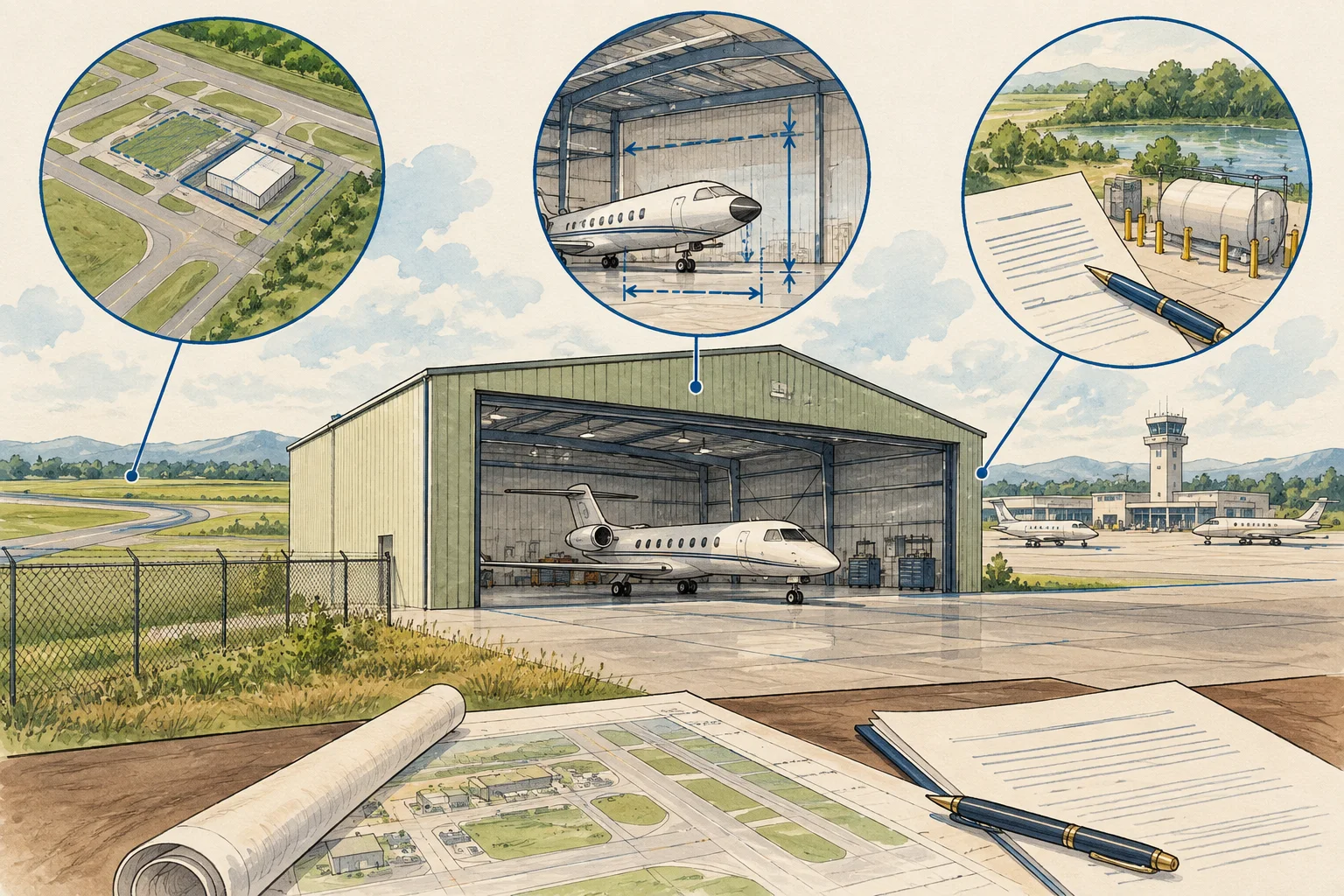
Conceptual illustration of airport tenure, hangar fit, assignment and operating-use records

What changes the decision

Read the operating model before the headline

01

Airport obligations define the context

FAA hangar-use guidance addresses aircraft-storage facilities in aeronautical areas of federally obligated airports. Preserve that scope rather than applying it automatically to every private airstrip or building. Identify the airport’s status and the relevant designated area, then ask the airport or appropriate advisor which documents govern the proposed activity at the specific location.

Source 1
02

The building interest may expire before the building

A ground lease can govern term, renewal, assignment, improvements and reversion. Keep the land interest and improvement ownership separate in the research file. Do not describe the remaining physical life of a hangar as the duration of the purchaser’s rights. A proposed renewal or informal airport assurance needs its own documented status.

03

Aircraft fit requires more than floor area

Door clear opening, internal clearance, apron access and the intended aircraft matter. Record the measurement source and configuration. A closed-door photograph or nominal hangar size does not establish safe movement or access. Ask a qualified aviation or engineering reviewer to assess fit, keeping operational rights and measured physical compatibility as separate questions.

Keep these separate

Three distinctions to preserve in the file

Evidence or situationWhat it tells youWhat to establish next
Fee interest or ground leaseDefines the real-estate tenure being offeredReview the actual instrument, term, assignment and improvement provisions.
Hangar dimensionsDescribe part of the physical envelopeConfirm clear door opening, internal constraints and the intended aircraft configuration.
Airport operating agreementEstablishes rights within its stated scopeMatch the proposed storage or service activity to current terms and required consents.
Conceptual illustration of airport tenure, hangar fit, assignment and operating-use records

A practical review sequence

Build a file another reviewer can follow

Use the sequence below to turn the initial description into specific document requests. Preserve contradictory records instead of choosing the more favorable version.

  1. Identify the airport and tenure

    Request the ground lease or title record, improvement ownership information and airport operating context. Record the parties and term without assuming a fee-simple sale. Keep renewals, options and proposed extensions distinct from the current interest. This establishes what the transaction actually transfers before a reviewer considers income or capacity.

  2. Read use and assignment conditions

    Collect the relevant airport agreements, lease amendments and required consent provisions. Ask AI to extract aeronautical-use, subleasing and assignment clauses with page references. Have airport counsel review their application. A general FAA guidance page or a seller’s description does not establish approval for a particular commercial activity.

  3. Collect measured fit evidence

    Request current plans, clear door dimensions, internal obstructions and apron or access information. Identify the intended aircraft and operating pattern. A qualified reviewer should assess compatibility and any required work. Keep a conceptual fit sketch clearly separate from measured evidence or an approved operating configuration.

  4. Prepare the transaction handoff

    List documents needed for assignment, remaining-term review, improvement responsibility and the proposed use. Separate airport consent from technical fit and from any business authorization. Export the worksheet for counsel, the airport representative and the technical reviewer. The tool does not certify aircraft clearance, grant airport access or value a leasehold interest.

Questions that arise during review

Resolve the ambiguity before the model

Does a hangar sale include the land?

Not necessarily. Establish whether the offering is a fee interest, ground lease, sublease or improvement interest. Read the actual instruments and assignment conditions. The marketing price and building description do not determine the legal interest conveyed.

Can a hangar be used for an unrelated business?

The answer depends on airport obligations, designated use and the applicable agreements and approvals. The cited FAA guidance has a specific federally obligated-airport scope. Ask the airport and counsel to evaluate the proposed activity rather than treating vacant interior space as unrestricted commercial premises.

What can AI usefully extract here?

It can align the ground lease, amendments and airport agreement into a term, use, assignment and reversion schedule with exact references. It can also flag inconsistent door dimensions. Counsel should confirm rights and the technical reviewer should confirm aircraft fit before either becomes an established conclusion.

From the page to your next task

Start with the useful output.

Hangar tenure and aircraft-fit register

Build an editable hangar tenure and aircraft-fit register, retain document references and open decisions, then export your team's working file.

Scope: airport tenure, hangar fit, assignment and operating-use records

Bring
An optional file nickname Status, observations and document references for the four evidence items; unknown is acceptable
Leave with
Hangar tenure and aircraft-fit register with editable, expandable records and document locators Two fictional worked rows showing mismatches and decisions to review CSV and readable text exports with row provenance, method sources and edition A separate document-request companion with suggested reviewers

Edition 2026-09-30.1

Evidence and scope

Follow each claim to its source.

Commercial Real Estate Lending, Comptroller’s Handbook, version 2.0

Office of the Comptroller of the Currency · Checked 2026-09-30

March 2022 supervisory handbook; lease review, property income, re-leasing costs and property-type distinctions.

  • Bank supervisory guidance, not a property appraisal, current market survey or universal financing standard. No handbook percentage is adopted as a deal assumption.
Open original source ↗
FAA Policy on Use of Hangars at Obligated Airports

Federal Aviation Administration · Checked 2026-09-30

Hangar-use guidance for aircraft-storage facilities in aeronautical areas of federally obligated airports.

  • Scope is specific to airport obligations and designated areas; it does not establish leasehold title, assignment rights or aircraft fit at any hangar.
Open original source ↗