


How to Find Off-Market Industrial and Warehouse Deals
Institutional capital dominates big-box logistics, but small-bay, infill, and owner-user industrial is still a fragmented, privately held market where off-market sourcing wins. The demand backdrop pushing industrial, the signals that flag a sellable warehouse or owner-user building, how to trace the business behind the parcel, and how to work it across markets. Sourced with CBRE and Cushman & Wakefield Q1 2026 data and Census e-commerce figures.
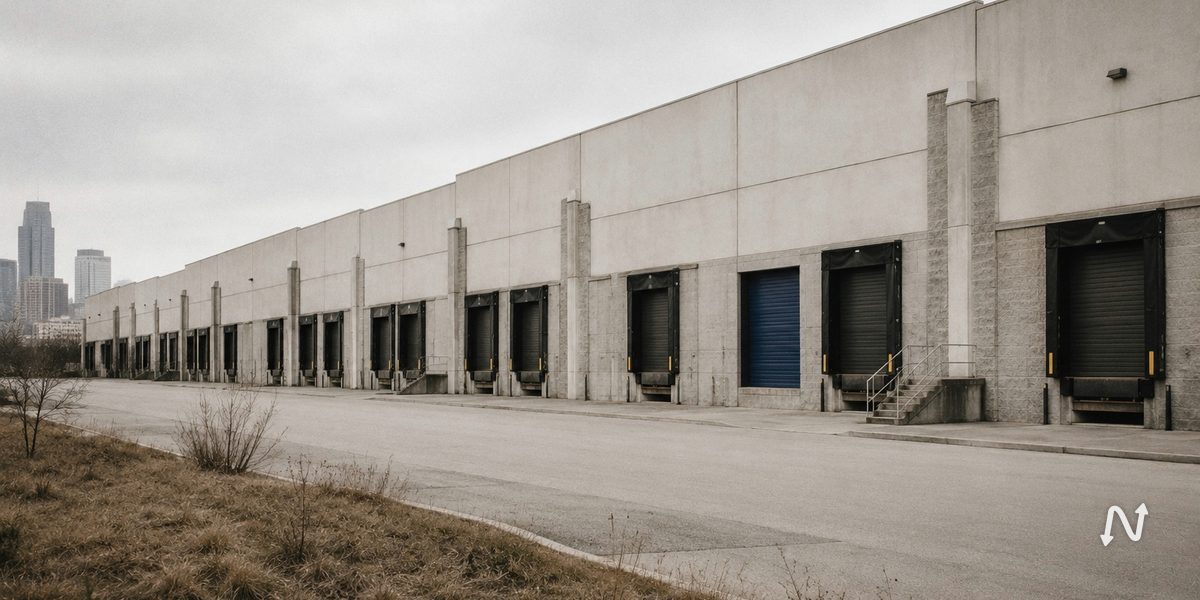
How to Find Off-Market Industrial and Warehouse Deals
In Short
To find off-market industrial and warehouse deals, you skip the institutional big-box market that trades through brokers and target the fragmented part instead: small-bay, infill, and owner-user buildings held by local businesses and long-tenured private owners. You work the signals that flag a likely sale, an owner-operator nearing retirement, a functionally obsolete building, infill land sitting under an underbuilt industrial use, a maturing loan, and long tenure, then resolve the entity or business behind the parcel and reach the decision-maker directly. This is where developers and investors both win, because the small industrial market is local, private, and mostly invisible to the capital chasing distribution centers.
The demand tailwind makes it worth the effort. Industrial fundamentals are healthy, supply is tightening, and structural demand from e-commerce keeps pulling on the sector, which means motivated owners are selling into a market that still wants what they have.
Where Industrial Off-Market Actually Lives
Not all industrial is the same market. The million-square-foot distribution centers trade between institutions in marketed processes, and there is little off-market edge to find there. The opportunity sits in the other half of the asset class: small and mid-bay warehouses, flex and light-industrial buildings, infill parcels, and owner-user properties where the business that operates there also owns the real estate. That segment is fragmented, locally owned, and rarely listed, which is the whole reason a direct sourcing approach works.
Owner-user industrial is the richest vein. A machine shop, distributor, or contractor who bought their building 25 years ago and is now winding down is a classic off-market seller: the real estate is incidental to a business decision, there is often real equity, and the owner is thinking about retirement, not a broker's marketing plan. Developers get a parallel angle, an aging low-density industrial parcel in a path of growth is a redevelopment site, and its owner has no idea it is worth more as land than as a warehouse.
The Demand Backdrop Pushing Industrial
Industrial is selling into strength, and the data says so. After a supply wave, vacancy has settled at a still-healthy level: CBRE put U.S. industrial vacancy at 6.7% in Q1 2026, with quarterly net absorption rebounding to 43.1 million square feet (CBRE). Supply is slowing while demand holds, and Cushman & Wakefield recorded asking-rent growth accelerating to 2.1% year over year in Q1 2026, up from 1.1% at the end of 2025 (Cushman & Wakefield).
Underneath the cycle is a structural driver that does not turn off: e-commerce. The Census Bureau put online sales at 16.9% of total U.S. retail in Q1 2026, up 9.8% year over year (U.S. Census Bureau). Every point of that shift needs warehouse and last-mile space. For a sourcing strategy, this matters because it means an owner considering a sale is selling a wanted asset, so a fair off-market offer competes well and a redevelopment thesis has a real exit. Demand that holds through a cycle is what turns a patient sourcing effort into closed deals rather than a list of owners who decided to wait.
The Signals to Watch
Industrial has a signal set that blends the owner-user angle with standard commercial distress:
- Owner-user nearing exit. A business owner who also owns the building and is approaching retirement, succession, or a wind-down is the highest-conversion industrial lead. Business filings and the operating entity's age are the tells.
- Functional obsolescence. Low clear heights, tight truck courts, insufficient power, and old dock configurations mean a building no longer fits modern use, which pushes an owner toward a sale to someone who will reposition or redevelop it.
- Infill land under an underbuilt use. A small warehouse or outdoor-storage yard on a large parcel in a growth path is a developer's target, and the owner rarely sees the land value.
- Loan maturity and rate reset. The same forced-decision trigger that drives all commercial sourcing applies to industrial debt maturing into higher rates.
- Long tenure. The baseline multiplier. A 20-year hold sits closer to a disposition or estate event and carries more equity.
Tracing the Owner Behind the Parcel
Industrial ownership almost always runs through an entity, and often through the operating business itself. The chain goes from the assessor's owner-of-record to the LLC or corporation to the individual principal, cross-referenced against state business filings that reveal the age and structure of the operating company. Owner-user properties give you a shortcut the pure-investment assets do not: the business trading there is often findable and its principals identifiable, so the parcel, the entity, and the human line up faster.
This is the same entity-resolution work described in tracing the business behind a parcel, extended with business-registration data. Turning that principal into a live phone and email is the enrichment step every signal depends on, drawing on the sources in our property-data-source guide.
Working Industrial Across Markets
By hand, a focused submarket search works fine: map the small-industrial inventory, flag the obsolete and owner-user buildings, resolve the owners, and reach out. The constraint, predictably, is reach. Industrial off-market deals are individually rare, so surfacing a real pipeline means watching a lot of parcels, and a lot of parcels is more than anyone works by hand for long.
A sourcing system monitors industrial inventory across your markets, scores each property on the owner-user, obsolescence, infill, and distress signals, resolves and enriches owners including the operating businesses, and delivers a ranked queue. What makes the industrial version distinct is that owner resolution does double duty, chasing the property entity and the operating business at once, since in owner-user deals the two are the same. The end-to-end version is the complete sourcing pipeline, the wider commercial context is in the broader commercial signals playbook, and the adjacent asset class most industrial buyers also touch is off-market self-storage sourcing.
The Two Buyers Hiding in One Signal
The same obsolete industrial building often has two very different buyers, and knowing which one you are decides how you underwrite the same signal. To an investor, a functionally obsolete warehouse with low clear heights and a tight truck court is a value-add or repricing play: buy it cheap from a tired owner, reposition it for a tenant who does not need modern logistics specs, and hold the cash flow. To a developer, the building is almost irrelevant, the land under it is the asset. A single-story warehouse or an outdoor storage yard on a well-located parcel in a growth corridor can be worth far more redeveloped than it will ever be as a warehouse, and the current owner, focused on the rent roll, usually has no idea.
This is why the developer half of the market is so underserved. The owner-user machine shop that has operated for thirty years is thinking about the business and retirement, not about the fact that their two-acre parcel sits in the path of new multifamily or logistics development. Nobody has told them, because nobody is systematically watching low-density industrial parcels against zoning and growth patterns and reaching out.
The signals a developer watches, an underbuilt parcel, a shifting zoning map, an assemblage forming next door, are as public as the investor's distress signals, but almost no one sources on them because it requires reading land use and ownership together across a market. Getting to that owner with a credible number before a broker or another developer packages the site is the entire developer edge, and it is a nearly empty field.
The building tells you which buyer you are. The land under it is where the developer's deal actually lives, and reaching its owner first is how you win it.
The scoring implication is that you should tag every flagged industrial parcel with both readings. A property might rank low as an investment, dated, small, hard to lease, and high as a redevelopment site, well located, underbuilt, in a growth path. A sourcing approach that only scores the building misses half the opportunity, because the worst warehouse on the best land is often the best deal. Carrying both lenses on the same parcel is what lets an investor and a developer share a pipeline and each pull the deals that fit them, rather than one of them dismissing a lead the other would have paid for.
How to Start
Choose one industrial submarket and build an inventory of its small-bay, flex, and owner-user buildings. Flag the obsolete stock and the owner-users whose operating businesses look near a transition, resolve the owners, and open direct conversations. That first pass shows you the real deal density, the data quality, and how owner-user sellers actually think, which is different from how a pure investor sells.
When you want standing coverage across more markets than you can inventory manually, an AI system that monitors industrial owners across your markets is what makes it continuous. We build these to run on the client's own infrastructure, so the pipeline, the data, and the governance stay in-house. You can see the shape of a deployed engine's output in the real numbers behind a live pipeline. And to map the industrial signals to your strategy first, start with a scoping call.
Questions and answers
How do you find off-market industrial and warehouse deals?
You focus on the fragmented part of the asset class, small-bay, infill, flex, and owner-user buildings, rather than institutional big-box logistics that trades through brokers. Flag the sell signals: owner-users near retirement, functionally obsolete buildings, infill land under an underbuilt use, maturing loans, and long tenure. Then resolve the entity or operating business behind the parcel and approach the decision-maker directly, before the property is ever marketed.
Why is small industrial better for off-market than big-box logistics?
Because ownership and process differ. Large distribution centers trade between institutions in marketed processes with little off-market edge. Small and mid-bay warehouses, flex space, and owner-user buildings are locally owned, often by the business operating there, and rarely listed. That segment is fragmented and mostly invisible to the capital chasing logistics, which is exactly the condition under which direct sourcing produces deals.
What is an owner-user industrial deal?
It is a property where the business operating there also owns the real estate, like a machine shop, distributor, or contractor that bought its building decades ago. These are prime off-market leads because the real estate is incidental to a business decision, there is often real equity, and an owner near retirement or succession is thinking about winding down, not about running a broker's marketing process. Reaching them directly gets you ahead of any listing.
Is now a good time to source industrial deals?
The fundamentals are supportive. CBRE put industrial vacancy at 6.7% in Q1 2026 with net absorption rebounding, and Cushman & Wakefield recorded rent growth accelerating to 2.1% year over year. Underneath the cycle, e-commerce reached 16.9% of U.S. retail in Q1 2026 per Census data, a structural demand driver. An owner selling into that strength is selling a wanted asset, so a fair off-market offer competes well.
How do you find the owner of an industrial property?
Ownership almost always runs through an entity, and often through the operating business itself. You trace from the assessor's owner-of-record to the LLC or corporation to the principal, cross-referenced against state business filings that show the operating company's age and structure. Owner-user properties give a shortcut: the business trading there is often findable and its principals identifiable, so the parcel, entity, and person line up faster than with pure-investment assets.
Can industrial deal sourcing be automated?
The sourcing can. A system can monitor industrial inventory across your markets, score each property on owner-user, obsolescence, infill, and distress signals, resolve and enrich owners including the operating businesses, and hand your team a ranked queue. Because industrial off-market deals are individually rare, you need to watch many parcels to build a real pipeline, and that breadth is what a system sustains and manual work cannot.
Related: AI for industrial commercial real estate.
Put the review into practice
For yards, move from a candidate list to the IOS underwriting worked example, where usable acreage and permitted use remain explicit review inputs. The small-bay industrial sourcing kit supports mandates that also include flex and warehouse buildings.
Related Articles
NextAutomation and Caelon announce an exclusive partnership
NextAutomation and Caelon bring proprietary commercial real estate data into AI workflows, with weekly research on loan maturities and distress signals.
Deduplicate a CRE Owner List Without Merging Unrelated Owners
Deduplicate a CRE owner list without merging unrelated entities. Use jurisdiction-aware keys, retained source records and a checked eight-row practice exercise.
How to Research a Commercial Property Owner’s Portfolio
Trace a commercial property owner across LLCs and county records. Use an evidence worksheet to separate confirmed holdings from possible portfolio matches.