


How to Find the Owner of an LLC Property (Entity Resolution Guide, 2026)
Find the person behind an LLC-owned property using county records and business filings. Verify roles, shared addresses, and source dates before outreach.

How to Find the Owner of an LLC Property (Entity Resolution Guide, 2026)
The Short Answer
To find the owner behind an LLC-owned property, you start from the county assessor's owner-of-record, then trace the entity through Secretary of State business filings, registered-agent records, and address-overlap patterns until you reach the managing member or principal. A filing may name a manager or member; a name still needs verification. You chain public records, each one narrowing the field, until the entity resolves to a named person you can actually contact. In anonymity-friendly states you lean harder on registered agents and address overlaps, because member names are not disclosed in the filing. Research time depends on the state, record access, and ownership structure. Done at scale it is the difference between a wall of "123 Main St LLC" and a list of real owners.
Entity resolution is one step inside the end-to-end off-market deal sourcing system. This guide goes deep on just that step, because it is where most sourcing efforts quietly stall.
Why the Entity Wall Exists
Property owners hold in entities for liability, privacy, and estate reasons, and the practice is widespread and growing. LLCs, LPs, and LLPs held 20.6% of U.S. single-family rentals in 2024, up from 15.2% three years earlier (Harvard Joint Center for Housing Studies). Zoom out to all residential and the picture is similar: nearly 9% of residential parcels across 500 U.S. counties are owned by a corporation, exceeding 20% in some cities (Stateline). For an entity-owned commercial property, the title holder and the person authorized to make a sale decision may be different.
The federal beneficial-ownership database is not a public owner-search service. FinCEN’s August 11, 2026 final rule, effective August 14, made the domestic-company reporting exemption permanent. Foreign entities that meet the reporting-company definition and do not qualify for another exemption still have reporting obligations. For public property research, continue with state filings and county records.
Step 1: Start With the Assessor's Owner-of-Record
The county assessor or recorder is your anchor. Pull the parcel and you get the owner-of-record, usually the entity name, plus the tax mailing address. That mailing address is the first real clue: it often differs from the property and frequently routes to the principal, a property manager, or an accountant who can lead you to the principal.
Record the exact entity name as filed, the mailing address, and the deed history. Small differences in the entity name matter at the next step, and the deed tells you when and how the entity took title, which sometimes names the individuals involved in the transfer.
Step 2: Pull the Secretary of State Business Filing
Take the entity name to the Secretary of State's business registry in the state of formation. This is the single richest record in the chain. Depending on the state, the filing can name the registered agent, the organizer, the managing member, officers, and a principal business address, along with the formation date and filing history.
The catch is that member and manager disclosure varies enormously by state, which is why this step succeeds outright in some states and only narrows the field in others. Either way, capture the registered agent, any named individuals, and every address on the filing. Those addresses are what power Step 4.
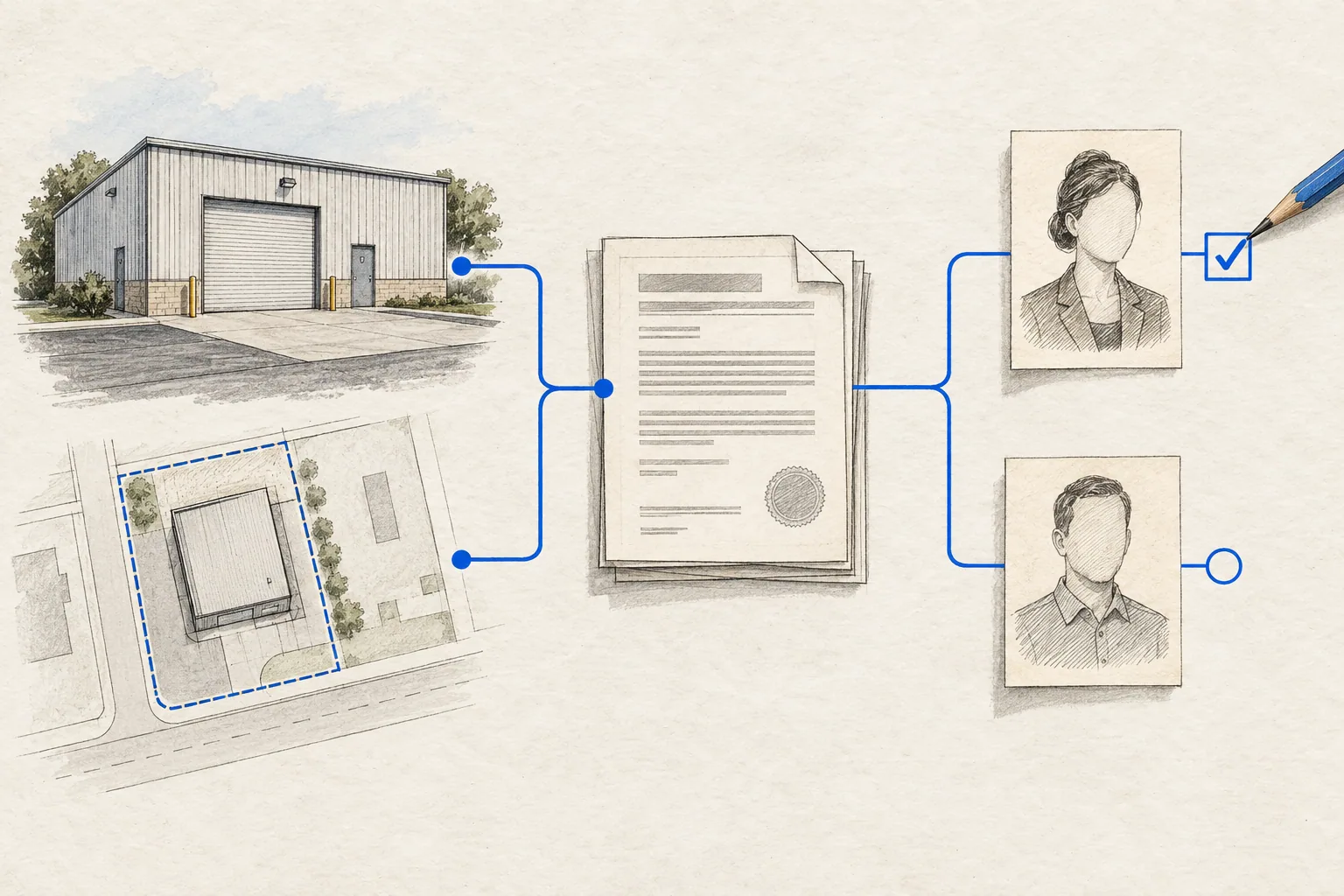
Step 3: Work the Registered-Agent Record
Every LLC has a registered agent, and in anonymity-friendly states the agent may be the only human-shaped record on the filing. If the agent is the owner themselves or a small local attorney or accountant, you have a direct line to the principal or someone one call away from them.
A commercial registered agent can serve unrelated businesses. Its name or address is a research lead, not evidence of common ownership. Keep the agent separate from the owner and manager fields.
Step 4: Cluster on Address Overlap
This is the step that cracks the hard cases. You now have several addresses: the tax mailing address, the principal business address, the registered-agent address, and any address tied to named individuals. Cross-reference them against other entity filings and property records. A repeated address, agent, or organizer creates a candidate connection. Shared accountants, law firms, mail services, and property managers can create the same pattern across unrelated owners. Confirm each relationship in an independent record before grouping the properties.
Use address overlap to prioritize the next filing to inspect. Keep a source URL, filing date, named role, and unresolved questions for every candidate. A useful research system preserves those distinctions when the list grows.
Step 5: Confirm the Human
Resolution is a claim until you verify it. Confirm the individual by triangulating across sources: the name on the deed or filing, the person tied to the recurring address, and public profiles that corroborate the connection to the entity and the property. You want enough independent evidence that you are confident you have the decision-maker, not a former organizer or an unrelated namesake.
Only once you have a confirmed principal do you move to finding their current phone and email, which is a separate discipline. We cover that end of the work in our guide to owner contact enrichment.
To organize the handoff, use the off-market sourcing workflow pack. Our anonymous industrial sourcing case study shows the separate roles of sourcing, owner research, and outreach.
State-by-State: Where Anonymity Bites
Member disclosure is not uniform, and knowing the state's rules tells you which step will do the heavy lifting.
- Anonymity-friendly states. Some formation records, including Delaware LLC certificates, do not identify every beneficial owner. Here Step 2 will not hand you a person, and you lean on registered-agent records and address overlap.
- Disclosure states. Many states require at least a manager or member on the filing or the annual report. In these, Step 2 often resolves the entity directly, and the later steps are confirmation.
- Formation vs operation. An entity may be formed in an anonymity-friendly state but registered as a foreign entity to do business where the property sits. Always check the foreign registration in the property's state, it sometimes carries disclosures the home state does not.
- Annual reports. Even where the initial filing is thin, annual or biennial reports sometimes add officer or manager names over time. Check the full filing history rather than the formation document alone.
None of this is legal advice, and the rules change. Confirm a state's current disclosure requirements against the Secretary of State's own guidance before you rely on them.
Common Mistakes That Waste Hours
A few recurring errors produce a confident wrong answer or send outreach to the wrong person.
- Stopping at the registered agent. A commercial agent service is not the owner. Treating the agent's address as the principal's is one of the most common ways to end up mailing the wrong person.
- Trusting a name match without an address match. Common names produce false positives constantly. If the person's name matches but no address, agent, or filing ties them to the entity, you have a candidate, not a confirmation.
- Ignoring the foreign registration. An entity formed in an anonymity-friendly state but doing business where the property sits often has a separate foreign-entity filing in that second state, sometimes with disclosures the home state hid.
- Missing layered structures. When an LLC is owned by an LP that is owned by a trust, resolving the top LLC gets you a member that is itself an entity. You have to keep pulling the chain, and series LLCs and holding structures are specifically designed to make you stop early.
- Working stale filings. Entities get dissolved, agents change, and members come and go. An organizer listed on a formation document from years ago may have nothing to do with the entity today. Weight the most recent filing, not the first one you find.
Every one of these is a place where a human doing the work fast gets it wrong, and where a disciplined, repeatable process, the kind a system enforces, keeps the resolution honest.
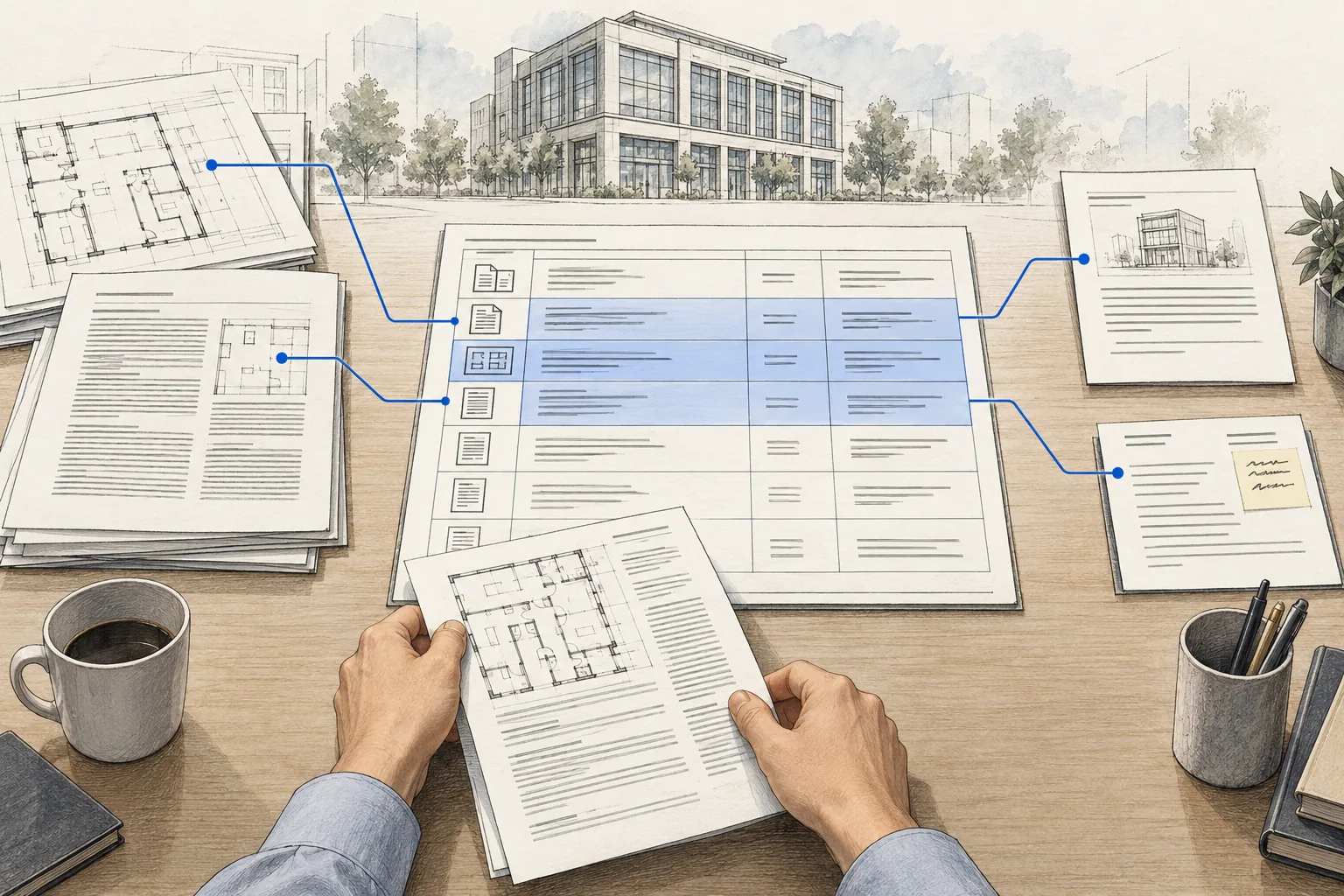
How do you connect a parcel, an LLC and a named person?
Keep three separate findings: which property the record identifies, which entity the ownership evidence names, and what a source actually says about a person’s role. Sharing an address or an agent does not, by itself, prove a person owns the property.
| Link to establish | Record the evidence | Avoid this shortcut |
|---|---|---|
| Property to record | Jurisdiction, parcel identifier, address and source date | Matching on a street address alone when parcels or buildings differ. |
| Record to entity | Exact entity name and the property document supporting the relationship | Substituting a similarly named LLC without checking its identity. |
| Entity to person | Named role, supporting source and observation date | Calling a registered agent the owner or decision-maker. |
| Person to outreach candidate | Why this role is relevant and what remains unverified | Treating a contact match as confirmed beneficial ownership. |
Fictional example: a parcel record names Oak Street Holdings LLC. A business filing lists Jordan as registered agent. Your output is a property-to-entity match plus a registered-agent observation, not a verified owner named Jordan. Leave the ownership or decision-making role unresolved until another source supports it.
For multiple entities, use the owner-portfolio research method before grouping holdings. NextAutomation’s off-market sourcing system provides the workflow for carrying source records and open questions into a reviewed prospect queue.
Put the review into practice
Once the seed entity is verified, use the owner-portfolio research worksheet to investigate its other holdings without treating shared agents as common ownership. To inspect property-level output for your mandate, request an off-market sample; the sample page explains what is included and what requires separate owner-resolution work.
Frequently asked questions
How do you find the owner of a property owned by an LLC?
Start with the county property record and exact title-holding entity, then check business filings and any foreign registration. Record named roles, source links, and dates. Treat address matches as candidate relationships until independent records corroborate them, and keep unresolved ownership explicit.
Can you look up LLC owners in a public federal registry?
No. FinCEN’s beneficial-ownership database is not public. Its August 2026 final rule made the domestic-company reporting exemption permanent; qualifying, non-exempt foreign reporting companies still have obligations. Use state business filings and county property records for public research.
Do public LLC filings always identify the owner?
No. Formation filings and periodic reports disclose different roles in different states. A registered agent or organizer may not be an owner. Check current state guidance, later reports, and foreign registrations, then corroborate any named person against the property and entity records.
What is address overlap and why does it matter for finding owners?
Address overlap connects candidate records for further research. It does not prove common ownership: agents, accountants, managers, and mail services can serve unrelated entities. Verify the relationship in independent records and retain the source and date before grouping properties.
How long does it take to find the owner behind an LLC?
Research time depends on the jurisdiction, available filings, and the number of entities in the ownership chain. Some records identify a relevant person directly; others remain unresolved after further research. Keep the evidence and unresolved relationships visible instead of treating a quick match as verified ownership.
Where It Breaks, and When to Automate
A layered ownership structure may remain unresolved even after careful research. Automation can organize records and surface candidate relationships, but it cannot turn missing evidence into a confirmed owner. Keep the title entity, named manager, contact candidate, and verification status in separate fields.
Before a record enters outreach, check the exact parcel, current title holder, the person’s stated role, and the date of the evidence. Record “unresolved” when that chain breaks. A shared agent or matching surname is not enough.
For a team building a repeatable sourcing process, review our managed off-market sourcing service. Bring your market, asset type, and buy box so the next conversation starts with the records your team actually needs.
When combining several exports, follow the CRE owner-list deduplication guide so a shared name or registered agent does not collapse unrelated entities.
Related Articles
Phase 1 ESA Checklist: How to Review a Phase I Report Before You Close
Use this Phase 1 ESA review checklist to track report dates, open findings and document references before closing, with an illustrative closing review register.
How to Build a Submarket Intelligence Report With AI
Build a CRE submarket report with dated sources, comparable definitions, a clear supply pipeline, and hypotheses your investment committee can test.
How to Find Off-Market Real Estate Deals With AI
Build an off-market CRE sourcing workflow with verified property signals, careful LLC research, buy-box screening, and a clear path to owner conversations.