

Restricted rents and subsidies

Affordable housing review: establish the rent restrictions

Affordable-housing research starts with the restriction attached to the property and the program attached to each unit. A public label does not establish the permitted rent, remaining term or treatment of utilities. Use AI to organize supplied agreements and deadlines, then have a program specialist reconcile the conditions before applying a conventional apartment income model.

NextAutomation editorial research method. Public sources establish the framework; the worksheet example is fictional and no property has been verified.

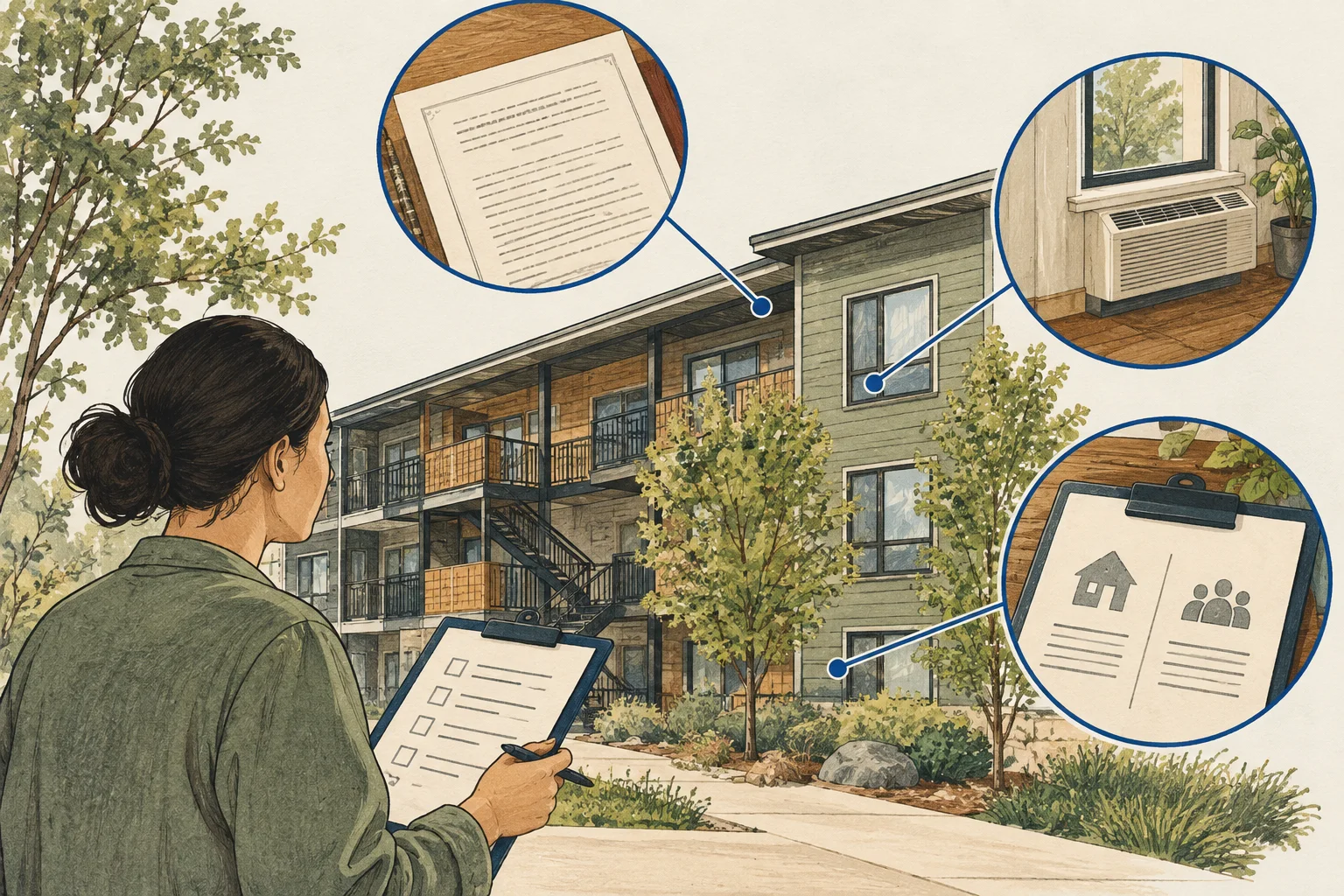
Conceptual illustration of affordable-housing program layers, restrictions and unit schedules

What changes the decision

Read the operating model before the headline

01

A database is an entry point

HUD’s LIHTC database provides program and property information. It can help identify a research path, but it is not the recorded agreement governing a particular property today. Ask for the actual restriction and amendments, then connect them to the correct parcels and units. Absence from one dataset does not establish unrestricted status.

Source 1
02

Program layers need separate columns

A unit may be affected by more than one agreement, subsidy or funding condition. Preserve each program, administrator, effective date and document reference. Where rules appear inconsistent, record the conflict for specialist review. Selecting the least restrictive figure from several schedules is not a defensible way to establish an allowable charge.

03

Rent is only one component

Tenant payments, subsidy receipts, utility treatment and other permitted charges can be recorded differently. Keep the applicable limit, actual charge and cash receipt as separate facts. A compliant limit is not evidence of collected income, and an occupied unit is not evidence that its eligibility and documentation requirements have been satisfied.

Keep these separate

Three distinctions to preserve in the file

Evidence or situationWhat it tells youWhat to establish next
Public program recordIdentifies a possible program and research leadObtain the recorded restriction and current administrator records for the property.
Published limit or allowanceSupplies an input with a date and program scopeMatch household, unit designation and utility responsibility before using it.
Actual charge and receiptShows the operator’s billing and collectionsReconcile with agreements and flag exceptions for compliance review.
Conceptual illustration of affordable-housing program layers, restrictions and unit schedules

A practical review sequence

Build a file another reviewer can follow

Use the sequence below to turn the initial description into specific document requests. Preserve contradictory records instead of choosing the more favorable version.

  1. Assemble the restriction stack

    Request recorded affordability instruments, financing-related restrictions, subsidy contracts and amendments. Log each document’s parties, covered units and dates without assuming that one expiration ends every obligation. Ask the owner to identify additional agreements rather than treating the first supplied document as exhaustive.

  2. Build a unit-program crosswalk

    Connect unit IDs to applicable designations and current operating schedules. Keep vacant, offline and manager units visible with their stated treatment. Use anonymized records at this stage. A unit mix total without unit identifiers can conceal a mismatch between the restriction schedule and the rent roll.

  3. Trace the charge calculation

    Request the dated rent-limit schedule, utility allowance or other applicable utility treatment, actual charges and subsidy reconciliation. Record the inputs without choosing a legal interpretation. Ask a program specialist to explain exceptions, transitions and which source governs when two dated schedules appear to conflict.

  4. Create a dated action register

    Extract reporting dates, unresolved notices and consent requirements from supplied documents, preserving the original page references. AI can draft reminders and requests but should not invent deadlines from a generic program name. Route ambiguous obligations to the administrator or counsel before an acquisition timetable relies on them.

Questions that arise during review

Resolve the ambiguity before the model

Does affordable mean LIHTC?

No. LIHTC is one program family. The page’s method asks which restrictions and assistance actually apply. A naturally lower-rent building is different from a property with recorded affordability conditions, even if both are marketed as affordable.

Can AI certify compliant rents?

No. It can compare supplied schedules and identify missing inputs. Compliance depends on the applicable agreements, current program requirements and unit circumstances. Use the worksheet to prepare a specialist’s review, not to generate a compliance certificate.

What if two restrictions expire on different dates?

Preserve both dates and the provisions creating them. Do not collapse the record into the earliest expiration or assume the later date governs every unit. Request an explicit explanation of continuing obligations and any required release or consent.

From the page to your next task

Start with the useful output.

Restriction and rent-authority stack

Build an editable restriction and rent-authority stack, retain document references and open decisions, then export your team's working file.

Scope: affordable-housing program layers, restrictions and unit schedules

Bring
An optional file nickname Status, observations and document references for the four evidence items; unknown is acceptable
Leave with
Restriction and rent-authority stack with editable, expandable records and document locators Two fictional worked rows showing mismatches and decisions to review CSV and readable text exports with row provenance, method sources and edition A separate document-request companion with suggested reviewers

Edition 2026-09-30.1

Evidence and scope

Follow each claim to its source.

Commercial Real Estate Lending, Comptroller’s Handbook, version 2.0

Office of the Comptroller of the Currency · Checked 2026-09-30

March 2022 supervisory handbook; lease review, property income, re-leasing costs and property-type distinctions.

  • Bank supervisory guidance, not a property appraisal, current market survey or universal financing standard. No handbook percentage is adopted as a deal assumption.
Open original source ↗
Low-Income Housing Tax Credit Database

HUD Office of Policy Development and Research · Checked 2026-09-30

Public LIHTC property and tenant data resources; project characteristics and program context.

  • Dataset presence is not the recorded restriction, a current utility allowance, compliance clearance or a complete affordable-housing inventory.
Open original source ↗